

A fashion campaign shoot without a clear shot list is one of the most expensive mistakes a creative team can make. Time runs out, setups get repeated, and the images that matter most to your marketing plan never get captured. A well-built fashion campaign shot list guide solves this before the first light goes up. It aligns your creative director, photographer, stylist, and marketing team around the same vision, turning a chaotic shoot day into a productive, story-driven session that delivers exactly what each channel needs.
Table of Contents
- Understanding the role of the shot list in fashion campaigns
- Preparing your shot list: aligning with campaign goals and delivery channels
- Structuring the shot list for production clarity and creative impact
- Executing the shoot: tips for staying on schedule and capturing all essential shots
- Verifying deliveries and refining the shot list for future campaigns
- A creative director's view: why embracing shot list discipline unleashes creativity
- Enhance your fashion campaign with professional photography and expert shot lists
- Frequently asked questions
Key Takeaways
| Point | Details |
|---|---|
| Strategic shot list | A fashion campaign shot list balances creative storytelling with precise technical directions to optimize shoot productivity and outcome. |
| Channel-specific planning | Customize your shot list for delivery platforms like Shopify and Instagram for maximum visual impact and marketing effectiveness. |
| Detailed structure | Include scene numbers, shot descriptions, camera movements, and gear specs to clearly communicate with the production crew. |
| Crop-safe framing | Plan shots with extra space around subjects to accommodate social media cropping without losing important details. |
| Verification and refinement | Use the shot list post-shoot to verify deliverables and improve future campaigns for better consistent results. |
Understanding the role of the shot list in fashion campaigns
A shot list is far more than a checklist. It functions as a production roadmap that carries both creative intent and technical instruction from the planning table to the studio floor. As StudioBinder defines it, a shot list is a strategic document that lists all the shots for a shoot day, communicating the vision to the director of photography and production team with technical details and creative direction. That dual function is what makes it indispensable for fashion marketing professionals.
When your photographer and crew receive a shot list, they can prep lighting rigs, select lenses, and plan model blocking before the talent even arrives. That preparation alone can save an hour or more on a standard shoot day. Without it, every scene becomes a negotiation, and those minutes add up fast.
A strong fashion campaign shot list structure typically includes the following elements:
- Scene and shot numbers for easy reference during the shoot
- Shot descriptions that capture mood, posing direction, and narrative intent
- Camera angle and movement notes (static, tracking, low angle, overhead)
- Shot type or size (wide establishing, medium full body, close-up detail)
- Lens and gear specifications to guide the director of photography
- Lighting style notes to brief the gaffer or lighting technician
- Background and set details to align the art director and stylist
Shot lists must also protect your most important creative shots while leaving room for spontaneous moments. Marking certain shots as "priority" or "must-have" ensures the team never leaves the studio without the images your campaign depends on.
Preparing your shot list: aligning with campaign goals and delivery channels
Before you write a single shot number, you need to know where your images are going. The delivery channel shapes everything from shot count to composition style. Channel-specific delivery targets materially change the number and type of shots needed. Shopify requires clarity-first white-background shots, while social media prefers styled, story-first images with crop-safe compositions.
Here is a practical way to build your preparatory framework:
- Define the usage for every shot. Is this image for an e-commerce product page, an Instagram carousel, a lookbook PDF, or a paid ad? Each has different technical requirements.
- Build a shot count by channel. For a Shopify product page, plan for one white-background hero image plus six to eight additional angles. For social media, plan one styled hero plus four to six supporting images.
- Note aspect ratio requirements. Instagram feed images favor 4:5, Stories demand 9:16, and e-commerce thumbnails often crop to 1:1. Each ratio affects how you frame your shots.
- Flag crop-safe compositions. Any shot destined for social media should be framed with extra space around the subject so cropping never cuts off a label, seam, or key design detail.
- Assign budget weight to each shot. Hero shots that appear on the homepage or in paid media deserve more setup time than secondary angles. Reflect that priority in your shot list.
Pro Tip: Build a simple spreadsheet before writing the shot list itself. List every deliverable your campaign needs across all channels, then group similar shots together. You will often find that one setup can serve three or four different deliverables, which saves significant time and cost.
| Channel | Hero shot type | Recommended angles | Composition priority |
|---|---|---|---|
| Shopify product page | White background, full product | 6 to 8 | Clarity and detail |
| Instagram feed | Styled, lifestyle context | 4 to 6 | Story and crop-safe |
| Lookbook or editorial | Narrative, model-driven | 3 to 5 | Mood and brand identity |
| Paid digital ads | Clean, high contrast | 2 to 3 | Text overlay space |
With your goals and channels defined, the next step is structuring the shot list to communicate your vision precisely to the production team. You can also explore e-commerce campaign shot list tips and delivery platforms and shot planning for deeper guidance on channel-specific preparation.
Structuring the shot list for production clarity and creative impact
A shot list that reads well on paper but confuses the crew on set is not doing its job. The structure must serve both the creative director's vision and the crew's need for fast, accurate execution. Shot lists in fashion campaigns should include story-driven elements such as mood, posing, and background, plus technical fields like shot size, camera movement, and equipment to enable seamless execution.
Every row in your shot list should answer these questions for the crew:
- What are we shooting? (product, model, detail, lifestyle scene)
- How are we framing it? (shot size, angle, movement)
- What does it feel like? (mood, lighting style, color palette)
- What gear do we need? (lens, camera body, tripod, lighting modifier)
- Where does this shot go? (channel destination and priority level)
The table below shows how story-driven and technically focused shots differ in their shot list entries:
| Element | Story-driven shot | Technical/e-commerce shot |
|---|---|---|
| Shot description | Model in motion, coat billowing, urban rooftop | Front-facing jacket, white seamless background |
| Mood note | Confident, aspirational, golden hour feel | Clean, neutral, no shadows |
| Camera movement | Slow tracking left to right | Static, tripod-locked |
| Lens | 85mm f/1.4 for shallow depth | 50mm f/8 for full sharpness |
| Posing direction | Natural stride, eyes forward | Garment centered, no body movement |
Grouping shots by setup and location is one of the most practical things you can do for shoot efficiency. Moving lights, swapping backgrounds, and changing lenses all take time. When you cluster shots that share the same setup, you protect your schedule without sacrificing creative variety.

Pro Tip: Color-code your shot list by priority level. Red for must-have shots, yellow for important but flexible, and green for bonus or creative exploration shots. Share this color-coded version with your photographer and first assistant so the whole crew can see the workflow at a glance.
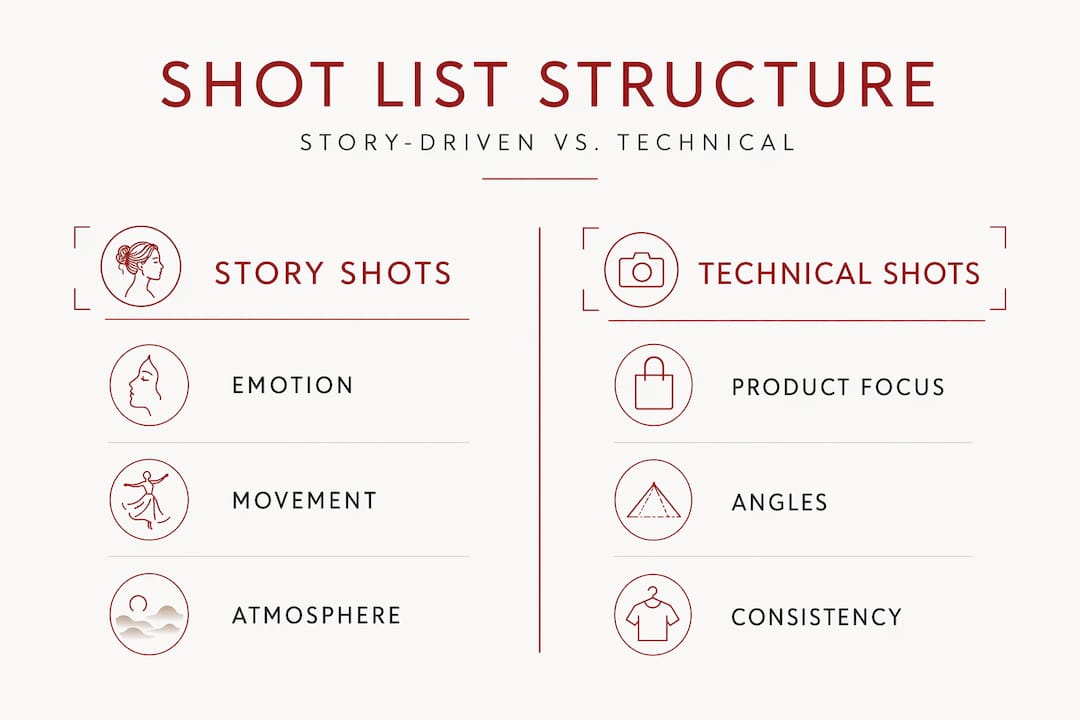
You can see how story-driven shot list examples translate from planning to final imagery, and review fashion campaign shot list best practices for additional structural guidance.
Executing the shoot: tips for staying on schedule and capturing all essential shots
The shot list is only as valuable as the discipline you bring to using it on the day. A well-run shoot day follows the shot list like a sequence, not a suggestion. Fashion shoot days benefit from clear shot order, grouping by camera and lens setups, and specifying crop-safe framing to avoid costly reshoots and maintain editing flexibility.
Follow these steps to keep the day moving:
- Brief the crew on the shot list before the first setup. Walk through the priority shots, flag any technically complex setups, and confirm everyone understands the sequence.
- Work through setups in order. Complete all shots in one lighting configuration before moving to the next. Jumping between setups wastes time and disrupts the crew's rhythm.
- Direct models with single-focus instructions. Instead of saying "look confident and move naturally and think about the brand," give one clear direction at a time. "Walk toward me slowly" produces better results than three instructions layered together.
- Frame every shot with breathing room. Leave more space around the subject than you think you need. Post-production cropping is far cheaper than a reshoot.
- Check off shots as you go. Do not rely on memory. Mark completed shots in real time so you always know where you stand against the schedule.
"The shot list does not limit what you can shoot. It guarantees that you capture what you must shoot, and then gives you the freedom to explore once the essentials are done."
Pro Tip: Assign one team member as the shot list guardian for the entire shoot day. Their only job is to track which shots are complete, which are still needed, and flag when the team is running behind. This role alone prevents the most common end-of-day scramble.
For a practical look at how shoot day planning flows from preparation to execution, explore this example shoot day planning from the Ken Jones Photography portfolio.
Verifying deliveries and refining the shot list for future campaigns
The shoot is done, but the shot list's job is not finished. Using it as a verification tool after the session is one of the most underused practices in fashion campaign production. Reviewing delivered shots against the list ensures marketing needs are met and helps prepare for smoother shoots going forward.
Here is what a thorough post-shoot review should cover:
- Compare captured images against every shot list entry. Confirm that each required angle, detail shot, and hero image was delivered.
- Check technical quality. Review sharpness, exposure, color accuracy, and whether crop-safe framing was maintained across all images.
- Assess brand consistency. Do the images feel cohesive? Do they align with the campaign's mood and visual identity?
- Verify channel compatibility. Can each image be cropped and formatted for its intended platform without losing key visual information?
- Gather team feedback. Ask the photographer, stylist, and art director what worked well and what the shot list missed. Their input is the most valuable data you have for the next campaign.
| Review category | What to check | Common issue to watch for |
|---|---|---|
| Shot completeness | All list entries delivered | Missing detail or secondary angles |
| Technical quality | Sharpness, exposure, color | Soft focus on hero shots |
| Brand consistency | Mood, palette, styling | Inconsistent lighting across setups |
| Channel compatibility | Crop ratios, text overlay space | Subject too close to frame edge |
Pro Tip: Maintain a reusable shot list library organized by campaign type and delivery channel. Index entries by product category, season, and platform. When the next campaign brief lands on your desk, you will have a working template ready in minutes rather than starting from scratch every time.
You can use campaign delivery verification resources to build a consistent review process across your team.
A creative director's view: why embracing shot list discipline unleashes creativity
There is a persistent belief in fashion creative circles that detailed planning kills spontaneity. After more than 30 years producing fashion campaigns in New York and around the world, the evidence points in the opposite direction. The shot list's job is to communicate specific production information so departments can execute quickly. When that communication is clear, the creative team is freed from logistics and can focus entirely on the work.
Think about what actually kills creativity on a shoot day. It is not having a plan. It is confusion about what comes next, arguments about equipment that was not prepped, and the anxiety of running behind schedule. A disciplined shot list eliminates all three. When the crew knows exactly what they are building toward, they move faster, set up with more confidence, and bring more energy to each frame.
There is also a narrative dimension that most shot lists ignore. When you plan your shot sequence around story progression, moving from establishing wide shots to intimate close-ups to dynamic action moments, the resulting images feel like a campaign rather than a collection of photographs. That sequencing is a creative decision, and it belongs in the shot list from the start.
Incorporating rehearsal phases and movement direction into your creative shot list approach is another practice that pays dividends. Giving models time to move through a scene before the camera rolls produces more natural, confident imagery. That instruction belongs in the shot list, not as an afterthought on the day.
The teams that produce the most compelling fashion campaigns are not the ones who improvise freely. They are the ones who plan precisely and then execute with full creative attention.
Enhance your fashion campaign with professional photography and expert shot lists
Translating a well-crafted shot list into images that genuinely move a fashion brand forward takes more than good planning. It takes a production team that understands how to execute both the technical and creative dimensions of a campaign at the highest level.
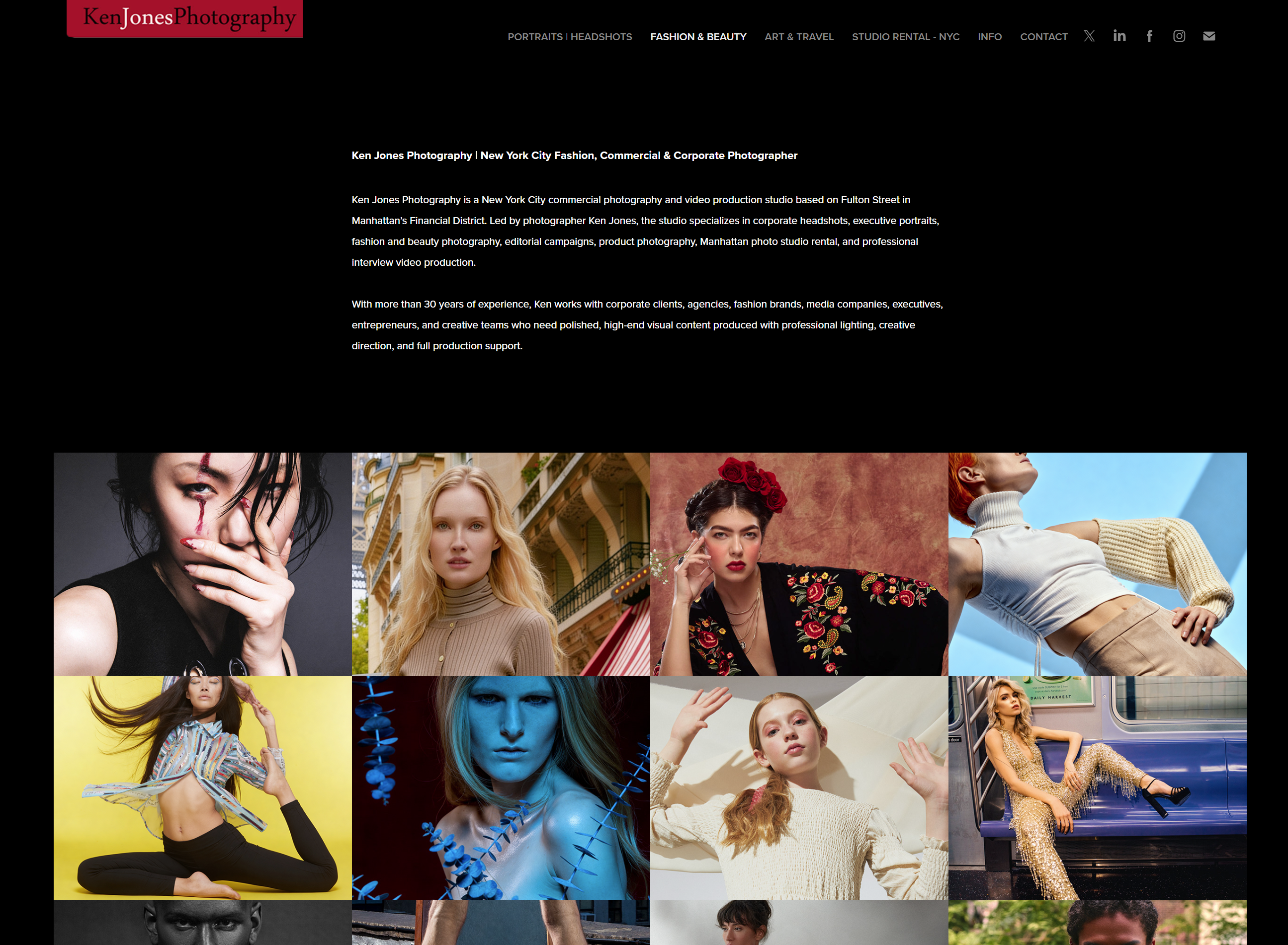
Ken Jones Photography brings over 30 years of experience to every professional fashion campaign photography project, with full shot list integration built into the production process from day one. The Manhattan studio is equipped for complex editorial and e-commerce shoots, with lighting infrastructure, backdrops, and casting support ready for campaigns of any scale. Whether you are producing editorial fashion campaign shoots or building a library of e-commerce fashion photography services assets, the studio's production expertise helps you capture every shot on your list with precision and creative confidence.
Frequently asked questions
What is a fashion campaign shot list and why is it important?
A fashion campaign shot list is a detailed plan outlining every shot to be captured during a photo shoot, ensuring clear communication between marketing and production teams. As StudioBinder notes, it communicates the vision to the director of photography and first assistant director, saving time and supporting creative storytelling throughout the shoot day.
How does the channel of delivery affect a fashion campaign shot list?
Different channels require different types and numbers of shots. Channel-specific delivery targets materially change how many angles you need and what you emphasize, with Shopify favoring clarity-first white-background images and Instagram demanding styled, story-driven compositions with crop-safe framing.
What technical details should be included in a fashion campaign shot list?
Include scene and shot numbers, detailed shot descriptions, camera movements, shot sizes and types, and lens and gear requirements. Shot lists should include shot size, camera movement, lens and gear requirements, mood, environment, and posing and styling notes to ensure the crew executes shots efficiently and consistently.
How can I ensure the images work well across social media crop formats?
Shoot with extra space around the subject to allow safe cropping to common aspect ratios like 1:1 or 4:5. Specifying crop-safe composition requirements at shot list time prevents cutting off labels or edges when reformatting images for social media platforms.
What is a common mistake to avoid when creating a fashion campaign shot list?
Failing to include both creative mood elements and technical production details leads to confusion and wasted shooting time. Shot lists must be written for the crew, not only for marketing, because a list that only serves the marketing brief leaves the production team without the technical guidance they need to execute efficiently.
Recommended
- Ken Jones Photography | NYC Fashion, Beauty & Commercial Photographer | Manhattan Studio Rental - Advertising Campaign Photography
- Ken Jones Photography | NYC Fashion, Beauty & Commercial Photographer | Manhattan Studio Rental - Fall Lookbook for CMOI – Brooklyn Designer
- Ken Jones Photography | NYC Fashion, Beauty & Commercial Photographer | Manhattan Studio Rental - Fashion Editorial in Paris | C’moi Fall Collection
- Ken Jones Photography | NYC Fashion, Beauty & Commercial Photographer | Manhattan Studio Rental - Out and About! - Designer Evening Dress Campaign