
A professional corporate headshot is a high-quality, purposefully composed photograph focused on your head and shoulders, created specifically to represent you in a business context. It is not a cropped vacation photo or a casual selfie with a clean background. LinkedIn profiles with professional headshots receive 21 times more views and 9 times more connection requests than those without one. That gap is not about vanity. It is about the signal your photo sends before you ever speak a word. Your headshot is often the first thing a recruiter, client, or collaborator sees, and it shapes their judgment of your competence and trustworthiness within seconds.
Table of Contents
- Key Takeaways
- What makes a headshot truly professional
- How to prepare for your corporate headshot session
- AI headshots vs. traditional studio photography
- Using your headshot across platforms for maximum impact
- My perspective on headshots and professional identity
- Get your headshot done right with Kenjonesnyc
- FAQ
Key Takeaways
| Point | Details |
|---|---|
| Definition matters | A professional corporate headshot is a polished, business-focused portrait of the head and shoulders, not a casual or repurposed photo. |
| First impressions are fast | Judgment about competence forms within 100 milliseconds of viewing a photo, making quality non-negotiable. |
| Preparation drives results | Wardrobe, grooming, and posing choices directly affect how professional and approachable your headshot appears. |
| AI is a real option | AI headshot tools offer cost and speed advantages, but traditional studio photography still delivers superior authenticity and customization. |
| Consistency builds recognition | Using the same headshot across LinkedIn, your resume, email signature, and company profiles reinforces your personal brand. |
What makes a headshot truly professional
Most people think a professional headshot just means a clear photo with a plain background. The reality is more specific than that, and understanding the difference will help you recognize quality when you see it and prepare for it when you book a session.
Sharpness and focus
The eyes must be in sharp focus. This is non-negotiable. A slightly soft image reads as amateur, even if everything else looks polished. A skilled photographer uses appropriate depth of field to keep the face crisp while allowing the background to fall away softly. This creates depth without distraction.
Lighting that flatters without flattening
Lighting is where most DIY attempts fall apart. Soft, even illumination wraps around the face and minimizes harsh shadows. It creates dimension without drama. Window light can work, but it requires careful positioning. Studio lighting gives a photographer full control to shape a face, define the jawline, and create a mood that matches your professional context. A finance executive and a creative director may both need professional photos, but the lighting for each should feel distinctly different.
Composition and background
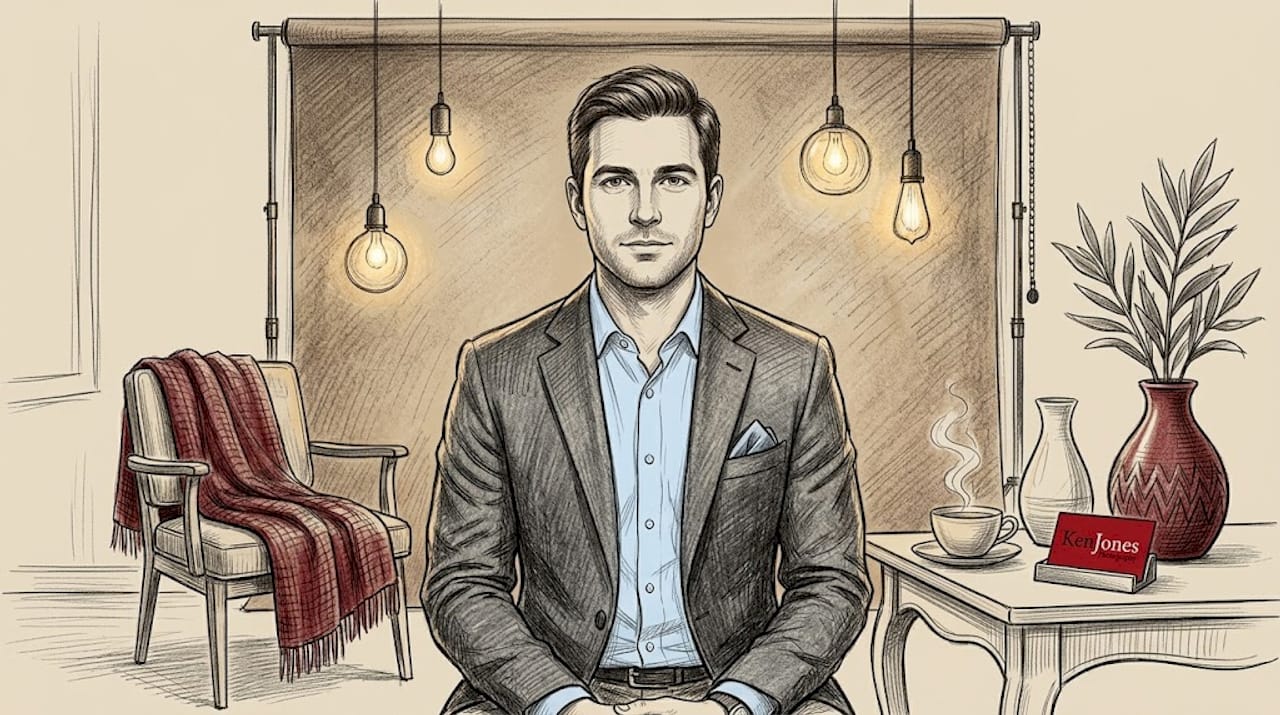
The standard framing for a corporate headshot includes the head, neck, and shoulders, with the subject positioned slightly off-center in the frame. Backgrounds should be clean and uncluttered. Solid colors, soft gradients, and blurred environmental settings all work well depending on your industry. What does not work is a busy background that pulls attention away from your face.
Expression and pose
A great corporate headshot balances professionalism and approachability. You want to project confidence without looking stiff, and warmth without looking unprofessional. A slight forward lean, relaxed shoulders, and a genuine expression accomplish this. The difference between a forced smile and a real one is immediately visible, and viewers respond to it unconsciously.
Here is a quick reference for the core elements that define a professional corporate headshot:
- Sharp focus on the eyes, with no motion blur or soft focus on the face
- Flattering light that creates dimension without harsh shadows or blown-out highlights
- Clean composition with a head-and-shoulders frame and a non-distracting background
- Confident expression that reads as both capable and approachable
- Industry-appropriate wardrobe that complements the face without competing with it
- Current likeness that reflects how you actually look today
On that last point: professional headshots have a shelf life of 3 to 4 years, but you should update yours immediately after significant changes like a new hairstyle, glasses, or notable weight change. A photo that no longer looks like you creates a cognitive disconnect when you meet someone in person.
Pro Tip: Ask your photographer to shoot a variety of expressions during the session. A photo that reads as warm and open on LinkedIn may be different from the one that reads as authoritative on a company website. Having options gives you flexibility.
How to prepare for your corporate headshot session
Knowing what a professional headshot looks like is one thing. Showing up ready to produce one is another. The preparation you do before the session accounts for a significant portion of the final result.
- Choose your wardrobe strategically. Solid colors photograph better than patterns. Busy prints, bold stripes, and large logos distract from your face and can create visual distortion on camera. Wear colors that complement your skin tone and align with your industry. A lawyer might wear a dark navy suit. A tech founder might choose a clean, structured shirt. Bring two or three options to the session so you have choices. You can find detailed guidance on wardrobe choices for headshots if you want to go deeper before your session.
- Attend to grooming the day before. Get a haircut at least a week before your session, not the day before. Fresh cuts can look too sharp or uneven in photos. For men, decide whether you want a clean shave or a groomed beard, and commit to it. For women, keep makeup consistent with how you present yourself professionally. Heavy contouring that looks great in person can appear overdone under studio lighting.
- Select your background based on context. A white or gray background reads as clean and corporate. A warm neutral works well for consultants or coaches who want to feel more approachable. An environmental headshot taken in a real office or urban setting can add context and personality, particularly for executives or entrepreneurs who want to communicate more than just their title.
- Practice your posing before the session. Stand in front of a mirror and experiment with your chin position. Bringing the chin slightly forward and down elongates the neck and defines the jaw. Rotate your body slightly away from the camera rather than facing it dead-on. These small adjustments make a significant difference.
- Consider the role of a professional photographer carefully. AI tools and smartphone cameras have improved dramatically, but a trained photographer brings creative direction, real-time feedback, and the ability to put you at ease. That last element matters more than most people expect. Comfort in front of the camera translates directly into the quality of your expression. Before you book, review the questions to ask your headshot photographer to make sure you are choosing the right fit.
- Update your photo after significant changes. Do not wait for your next job search to realize your headshot is five years old. If your appearance has changed meaningfully, update it now.
Pro Tip: Wear your chosen outfit for 30 minutes before the session. Clothes that have been sitting in a bag look wrinkled and stiff. Wearing them in advance lets them settle naturally and helps you feel comfortable in what you have on.
AI headshots vs. traditional studio photography
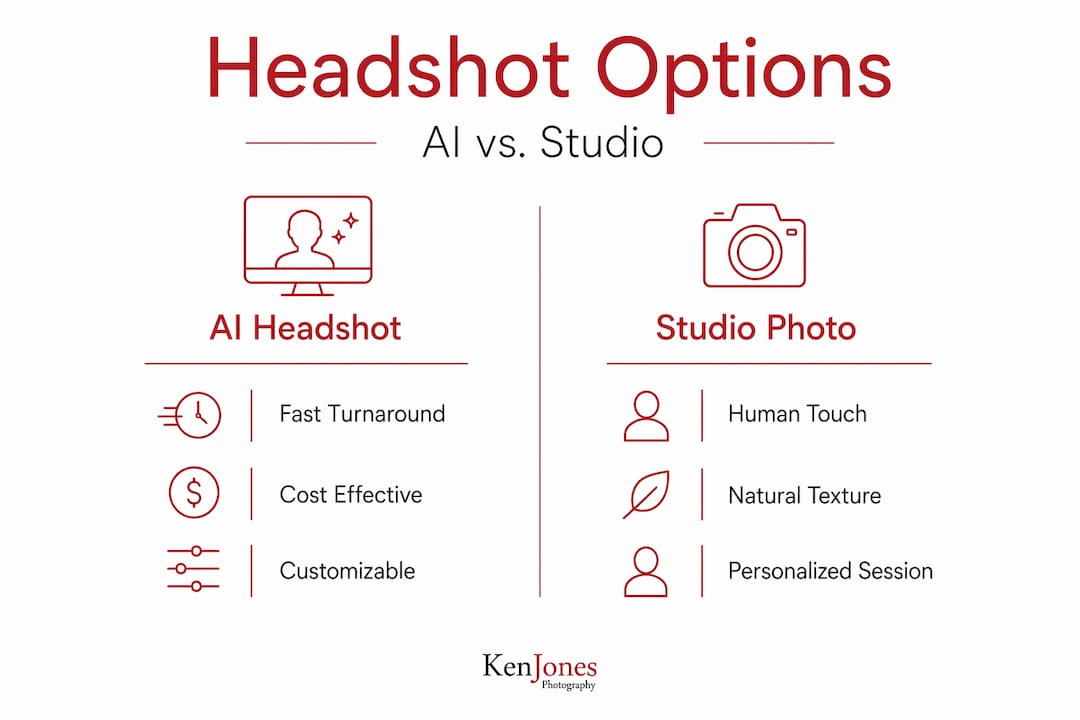
The conversation around corporate headshots has shifted considerably in recent years. AI-powered headshot platforms now allow professionals to upload a series of selfies and receive studio-quality portraits in return. AI headshot generators can cut photography expenses by up to 90% and deliver results in under an hour. For remote teams or professionals with tight budgets, this is a genuinely useful development.
Some AI platforms deliver 40 or more images in under an hour, with customizable backgrounds and consistent lighting across every photo. For a company that needs 50 employees to have matching headshots without flying everyone to a studio, the efficiency argument is hard to dismiss.
That said, the comparison between AI and traditional photography is not simply a cost calculation.
| Factor | AI headshots | Traditional studio photography |
|---|---|---|
| Cost | Significantly lower, often under $30 per person | Averages around $250 for 2 to 3 edited images |
| Turnaround time | Under one hour in most cases | Days to weeks including editing |
| Authenticity | Variable; can look slightly artificial or over-processed | High; captures genuine expression and personality |
| Customization | Limited to platform presets and background options | Full creative direction, lighting, and styling control |
| Best use case | Remote teams, budget constraints, quick personal branding | Executive portraits, high-stakes professional contexts |
| Consistency across a team | Strong; uniform lighting and backgrounds by default | Requires coordinated sessions but achievable |
The limitations of AI headshots are real. Skin texture can look overly smooth. Expressions sometimes feel slightly off. The image may look polished but not quite like you. For a LinkedIn profile update or an internal company directory, AI may be entirely sufficient. For a board presentation bio, a major speaking engagement, or a high-profile job search, the authenticity and creative control of a professional studio session is worth the investment.
The best approach depends on your professional context and what you are using the photo for. Neither option is universally right.
Using your headshot across platforms for maximum impact
Getting a great headshot is only half the work. How you deploy it determines how much value it actually delivers. Consistent use of your headshot across LinkedIn, your website, email signatures, and marketing materials builds recognition and reinforces your personal brand every time someone encounters your name online.
Here is how to put your headshot to work effectively:
- LinkedIn profile photo. This is the highest-priority placement. Your LinkedIn photo appears in search results, connection requests, and message threads. Use your best image here and make sure it is cropped tightly enough to read clearly at thumbnail size.
- Resume and portfolio documents. Including a headshot on a resume is standard practice in many industries and countries. Keep the image small, professional, and consistent with what appears on your LinkedIn profile.
- Company website and bio pages. If your company has a team page, your headshot should match the visual style of your colleagues' photos. Consistency across a team page signals organizational cohesion.
- Email signature. A small headshot in your email signature adds a personal touch to professional correspondence and helps recipients connect a face to your name before they meet you.
- Business cards and marketing materials. For consultants, coaches, and client-facing professionals, a headshot on a business card or one-page profile makes the card more memorable and personal.
- Social media profiles. Use the same photo across Twitter/X, Instagram (if used professionally), and any other platforms where you present yourself professionally. Switching photos between platforms creates confusion and dilutes recognition.
The principle underlying all of this is consistency. When someone sees your name on LinkedIn, then in an email, then on a conference program, and the photo is the same each time, they build a clear mental image of you. That recognition translates into trust. You can learn more about how corporate headshots support branding across business contexts if you want to think through your strategy further.
One additional consideration: match the style of your headshot to your personal brand and the company you represent. A startup founder and a managing partner at a law firm should not have the same headshot aesthetic. The lighting, background, and expression should all reflect the professional world you operate in.
My perspective on headshots and professional identity
After more than 30 years behind the camera, I have watched the conversation about professional headshots change in ways I did not expect. The technology has improved. The platforms have multiplied. And yet the fundamental challenge remains exactly the same: helping someone look like the best, most authentic version of themselves in a single frame.
What I have learned is that most people underestimate how much a headshot communicates beyond appearance. The image signals your level of investment in your own professional brand. A blurry, outdated, or clearly DIY photo tells a viewer something about how seriously you take your own presentation. That impression happens before you have said anything.
I have also seen professionals overthink the polish at the expense of personality. The goal is not to look like a stock photo. The goal is to look like a version of yourself that someone would want to work with. Those are different targets, and chasing the wrong one produces images that are technically clean but emotionally flat.
My honest take on AI headshots: they are useful, and they will keep improving. But they cannot replicate the experience of working with a photographer who reads the room, adjusts the light in real time, and coaches you through an expression that actually looks like you. The final image reflects that process. Viewers may not be able to articulate why one photo feels more credible than another, but they feel it.
If you are serious about your career or your business, invest in a real session at least once. Use it as your anchor image across every platform. Update it when your appearance changes. And choose a photographer whose portfolio shows the kind of work you actually want, not just technical competence.
— Ken
Get your headshot done right with Kenjonesnyc
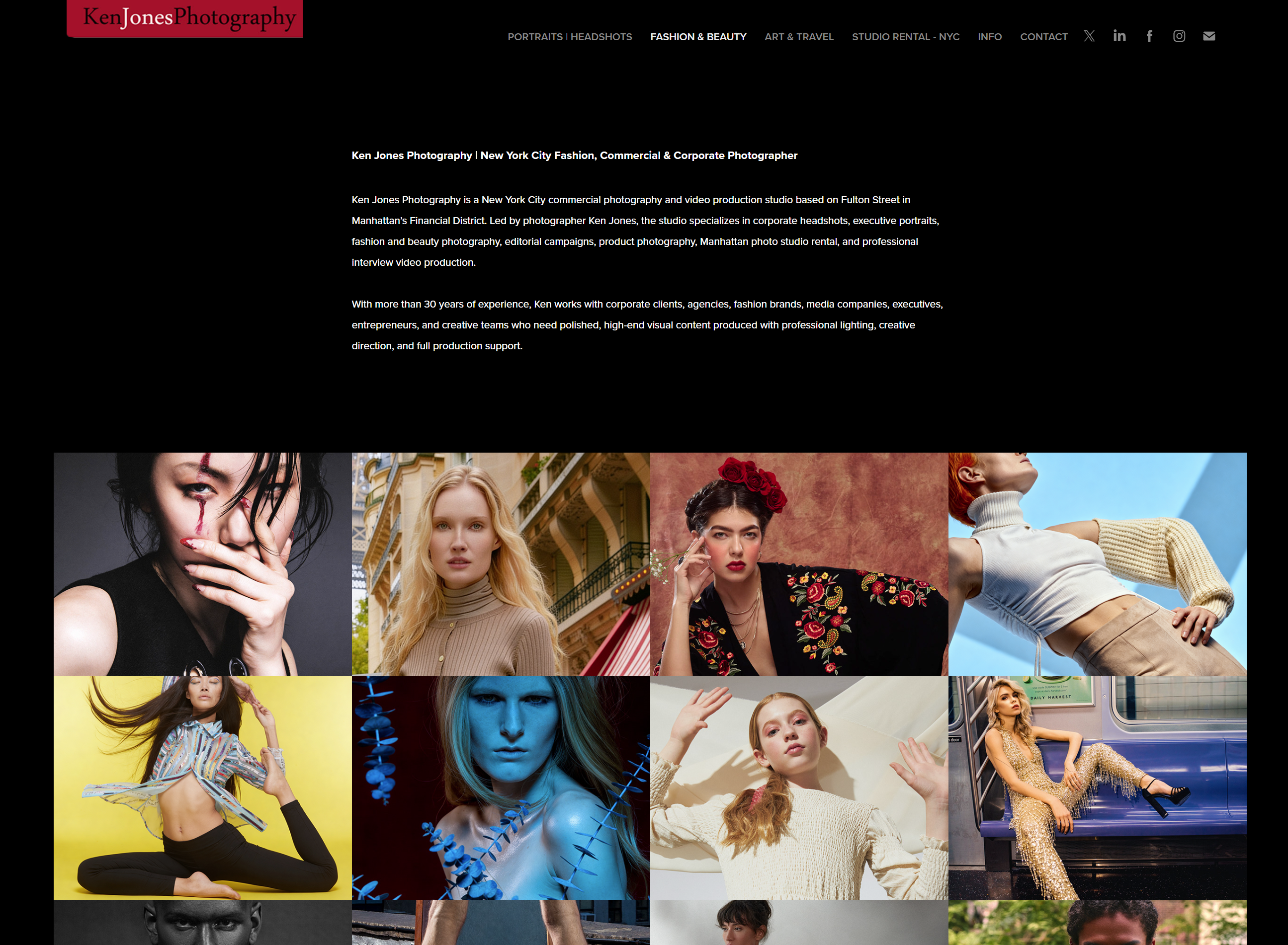
If you are ready to invest in a headshot that genuinely represents who you are professionally, Kenjonesnyc brings over 30 years of commercial and portrait photography experience to every session. Based in Manhattan's Financial District, the studio offers personalized creative direction, professional lighting, and full retouching, producing images that work for executive profiles, company websites, LinkedIn, and beyond. Whether you need a clean studio portrait or a more dynamic environmental portrait that places you in a real-world context, the studio tailors every session to your industry and personal brand. Explore the full range of corporate headshot services and reach out to discuss your session. The process is straightforward, the results are polished, and the difference shows.
FAQ
What is a professional corporate headshot?
A professional corporate headshot is a high-quality, business-focused portrait of the head and shoulders, taken by a professional photographer or produced through a professional-grade process, used to represent a person on LinkedIn, company websites, resumes, and other professional platforms.
How often should you update your corporate headshot?
Headshots should be updated every 3 to 4 years, or immediately after significant changes to your appearance such as a new hairstyle, glasses, or notable weight change, to avoid a disconnect between your photo and how you look in person.
What should you wear for a professional headshot?
Wear solid colors that complement your skin tone and reflect your industry's professional standards. Avoid busy patterns, bold stripes, and large logos because they distract from your face and can distort on camera.
Are AI headshots good enough for professional use?
AI headshots work well for internal directories, social media updates, and budget-conscious personal branding needs. For high-stakes contexts like executive bios or major job searches, traditional studio photography delivers stronger authenticity and creative control.
How much does a professional headshot cost?
Traditional studio sessions average around $250 for 2 to 3 professionally edited images. AI headshot platforms typically cost under $30 per person and deliver results in under an hour, making them a practical option for teams or individuals with budget constraints.
Recommended
- Ken Jones Photography | NYC Fashion, Beauty & Commercial Photographer | Manhattan Studio Rental - Headshots NYC | Corporate & Executive Portrait
- Ken Jones Photography | NYC Fashion, Beauty & Commercial Photographer | Manhattan Studio Rental - Environmental Headshots and Lifestyle Portraits
- Ken Jones Photography | NYC Fashion, Beauty & Commercial Photographer | Manhattan Studio Rental - Portraits | Headshots
- Ken Jones Photography | NYC Fashion, Beauty & Commercial Photographer | Manhattan Studio Rental - 7 Questions to Ask Your Headshot Photographer