
Visual content is no longer a support element in PR campaigns. It is the campaign. Yet most PR teams still treat photography as a budget line item rather than a strategic asset, settling for staged setups or generic stock images that fail to build real audience connection. Understanding why NYC-based photography elevates PR clients means recognizing that the city itself is part of the value. The combination of cultural authority, top-tier photographic talent, and the ability to deliver polished assets within 48 hours creates a competitive advantage that no other market consistently replicates.
Table of Contents
- Key takeaways
- Why NYC-based photography elevates PR clients
- How storytelling photography transforms PR campaigns
- Operational benefits of NYC-based photographers
- How to integrate NYC photography into your PR strategy
- Stock photos vs. NYC photography for PR
- My perspective: what most PR teams are still getting wrong
- Work with Kenjonesnyc on your next PR campaign
- FAQ
Key takeaways
| Point | Details |
|---|---|
| NYC adds cultural authority | Images shot in New York carry an aspirational quality that positions clients as credible, premium brands. |
| Storytelling beats staged shots | Authentic, emotion-driven photography consistently outperforms logo-heavy setups in engagement and conversion. |
| Speed supports PR timelines | Receiving 50 to 70 edited images within 48 hours keeps campaign activations and social media calendars on track. |
| Local knowledge shapes outcomes | NYC photographers understand iconic backdrops, event rhythms, and cultural nuances that outside photographers simply miss. |
| Stock photos cost you credibility | Generic images lack the authenticity required to build topical authority or generate the emotional resonance PR campaigns depend on. |
Why NYC-based photography elevates PR clients
The benefits of NYC photography go well beyond having a recognizable skyline in the background. New York City functions as a global media hub, and that status transfers directly to the brands photographed within it. Editorial outlets, social platforms, and international audiences associate NYC imagery with influence, sophistication, and relevance. When a PR client's campaign visuals carry that implied credibility, it changes how journalists, buyers, and consumers receive the brand.
Access to talent is a second major factor. NYC attracts photographers who specialize in storytelling, editorial work, fashion, and commercial production at the highest level. These are professionals who understand publication standards, brand positioning, and the difference between a technically correct image and one that actually moves people. That specialization matters when a PR team is pitching a feature spread or building social content that needs to stop a scroll.
The city's physical environment adds a third dimension. Shooting against authentic NYC backdrops, from Financial District architecture to the texture of a Chelsea art space, gives images a sense of place and aspiration that cannot be manufactured in a generic studio environment elsewhere. Authentic photos serve as luxury assets in saturated digital markets, and the NYC setting contributes directly to that premium perception.
- Cultural authority: NYC imagery carries global recognition that positions clients as players in the most competitive market in the world.
- Talent concentration: The city's photography community includes specialists in every discipline relevant to PR, from editorial portraiture to product and lifestyle work.
- Aspirational environments: Authentic NYC locations build brand stories that feel lived-in and desirable rather than manufactured.
- Media proximity: Proximity to major publications, agencies, and production networks means faster coordination and sharper creative alignment.
Pro Tip: When briefing a NYC-based photographer for a PR campaign, ask specifically about their editorial experience. Photographers with magazine or ad campaign backgrounds understand how to produce images that work across multiple placements, from press kits to social media to print.
How storytelling photography transforms PR campaigns
There is a meaningful difference between documenting an event and creating assets that serve a PR campaign for months afterward. Most photographers document. A storytelling photographer builds a visual narrative that carries emotional weight, drives media interest, and converts audiences into believers.
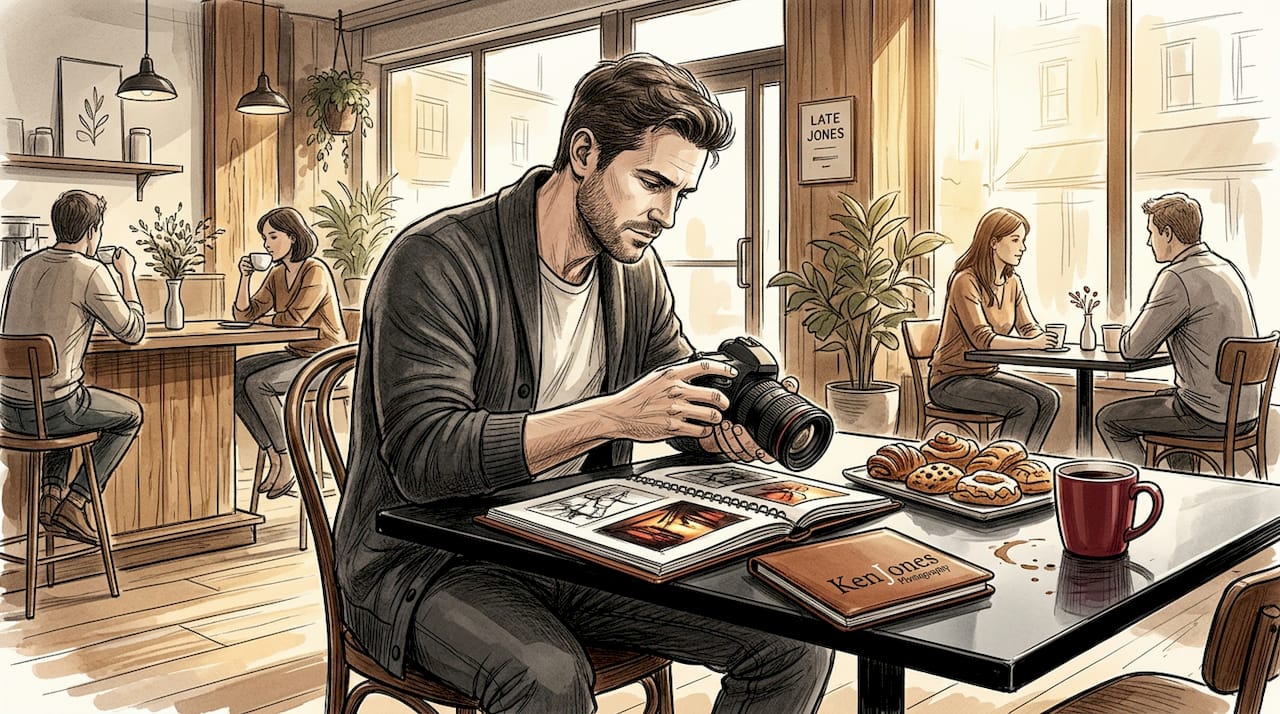
The distinction shows up most clearly in how images perform. Spontaneous engagement captured visually outperforms simple claims or statistics in marketing materials. A photo of a packed room reacting to a speaker tells a brand story that no caption can replicate. The laughter, the leaning-in, the moment of genuine surprise. Those details communicate trust, relevance, and desirability to everyone who sees them later.
The table below captures how the two approaches compare across key PR campaign needs:
| Criteria | Storytelling photography | Staged or logo-heavy photography |
|---|---|---|
| Emotional resonance | High. Captures authentic reactions and engagement | Low. Prioritizes brand marks over human connection |
| Media usability | Strong. Editorial quality for press and features | Limited. Often unsuitable for publication |
| Social media performance | High engagement from real, relatable moments | Lower engagement due to perceived inauthenticity |
| Longevity of assets | Long. Images serve campaigns for months | Short. Quickly feels dated or impersonal |
| FOMO generation | Powerful. Makes audiences wish they were there | Minimal. Fails to convey energy or exclusivity |
PR clients often mistakenly prioritize staged, logo-heavy photography, which delivers less marketing value than authentic, moment-driven images. The fix is not spending more money. It is changing the brief. Asking a photographer to capture the feeling of an event rather than a checklist of setups produces entirely different results.
Pro Tip: Replace traditional shot lists with a "moment brief" for your photographer. Describe three to five emotional beats you want the audience to feel when they see the images. This gives the photographer the creative latitude to anticipate and capture authentic moments rather than waiting for posed setups.
Operational benefits of NYC-based photographers
Beyond the creative and cultural advantages, there are concrete operational reasons why PR teams that work with NYC-based professionals consistently run smoother, faster campaigns.
- 48-hour turnaround: Clients receive 50 to 70 edited images within 48 hours of a shoot. For a PR team managing a product launch or event activation, that timeline is the difference between owning the news cycle and missing it.
- Unobtrusive event coverage: Experienced NYC event photographers know how to work a room without disrupting it. They understand crowd dynamics, lighting conditions in urban venues, and how to be present without pulling focus from the client.
- Iconic and culturally relevant backdrops: Local knowledge guides timing, locations, and spontaneous moments, producing images that feel authentic to New York rather than generically urban. That specificity adds value to every placement.
- Real-time content delivery: Modern NYC photographers provide infrastructure to push high-res content to social media during events rather than waiting for a traditional gallery. For PR teams managing live activations, this capability is increasingly non-negotiable in 2026.
- Full-service production capacity: Many NYC studios offer casting, styling, and location coordination as part of the engagement, reducing the coordination burden on PR teams who are already managing multiple moving pieces.
The combination of speed, local expertise, and production infrastructure is why the impact of photography on PR campaigns is measurably stronger when executed in New York by photographers who know the market. You get creative quality and operational reliability in the same package, and that combination directly supports your client's timeline and visibility goals.
How to integrate NYC photography into your PR strategy
Getting the most from NYC-based photography requires more than booking the right photographer. It requires integrating photography thinking into the campaign planning process from the start.
-
Build a strategic brief, not a shot list. Define the emotional and brand outcomes you need the images to deliver. What should a journalist feel when they receive your press kit? What should a consumer feel when they see a product in context? That clarity shapes every creative decision the photographer makes.
-
Choose photographers who understand NYC's media culture. A photographer with experience shooting for New York-based editorial publications, advertising agencies, or fashion brands understands production standards, fast-paced schedules, and what it means to create images for sophisticated audiences. Assessing a photographer's ability to predict event dynamics and capture brand-elevating moments is as important as reviewing their technical portfolio.
-
Align delivery timelines with your campaign calendar. If you have a social media activation launching 24 hours after an event, confirm in advance that the photographer can deliver edited assets within that window. Build this into the contract, not as an afterthought.
-
Plan for multi-channel usage from the first brief. Great images should work across press releases, social media, email campaigns, printed collateral, and future media pitches. Brief the photographer on the full range of placements so they can frame and compose with those needs in mind.
-
Negotiate usage rights clearly. Understand what you are licensing and for how long. PR teams working across multiple client campaigns need clean, clearly documented usage rights to avoid complications when images are placed in national or international media.
-
Leverage real-time delivery infrastructure when available. If your photographer can deliver curated images during a live event, coordinate in advance with your social media team. Having fresh, polished content pushing to Instagram or LinkedIn while an event is still active gives your client an immediate visibility advantage.
The integration of NYC photography for public relations works best when photography is treated as a production discipline, not a day-of logistics decision. The teams that plan for it strategically are the ones whose campaigns generate media coverage and audience response that justifies the investment.
Stock photos vs. NYC photography for PR
PR teams that rely on stock images or bring in non-local photographers for New York campaigns are working with a structural disadvantage. It is not just about image quality. It is about what those images can and cannot communicate.
| Criteria | NYC professional photography | Stock or non-local photography |
|---|---|---|
| Authenticity | Real people, real places, real moments | Generic, staged, and widely licensed |
| Brand specificity | Images built around your client's story | No brand connection by design |
| FOMO effect | Packed, engaged NYC events create persuasive FOMO | Impossible to replicate with stock |
| Media placement value | Editorial-quality assets suitable for press | Often rejected by publications for lack of originality |
| Long-term brand equity | Builds a consistent, recognizable visual identity | Creates visual inconsistency across campaigns |
| Cost efficiency | Higher upfront, stronger ROI over campaign lifespan | Low upfront, limited long-term return |
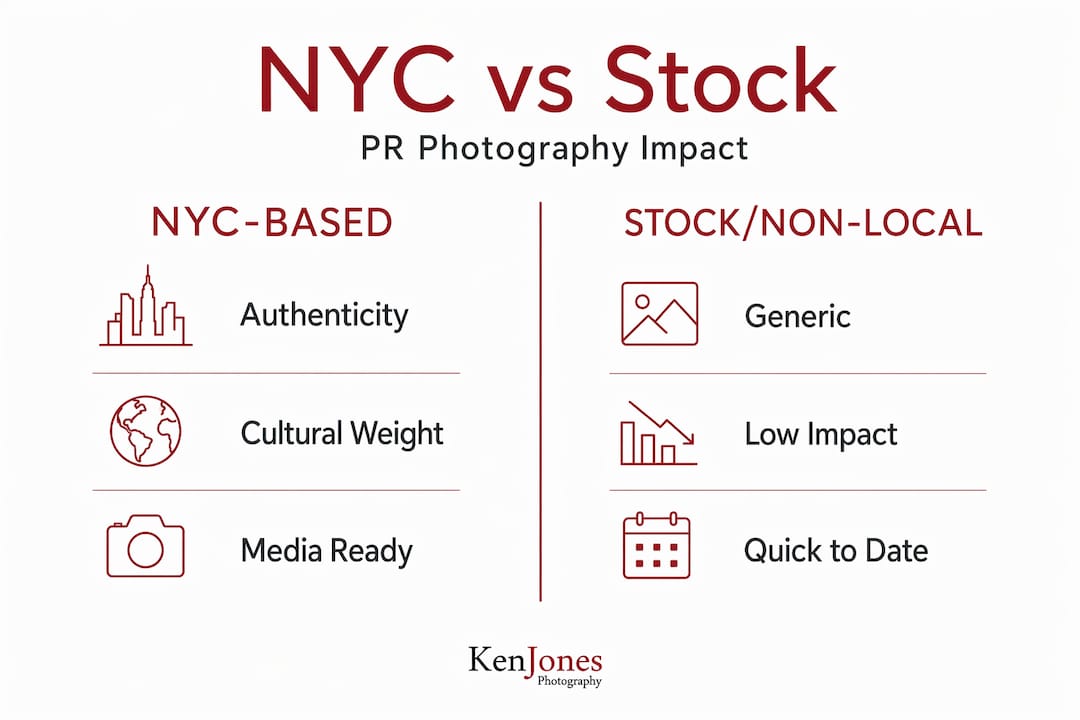
The credibility gap created by stock photography is real and growing. Audiences, journalists, and buyers have become skilled at identifying inauthentic imagery, and when they spot it, it undermines the entire narrative a PR team is trying to build. Professional NYC photography builds topical authority and authentic brand trust that AI-generated or stock imagery simply cannot replicate. The economics look different when you account for that reality.
The brand equity built through consistent, high-quality NYC photography also compounds over time. Each campaign adds to a visual archive that reinforces the client's identity across every media touchpoint. Stock imagery cannot do that. It fractures visual identity every time a new image is sourced from a different library.
My perspective: what most PR teams are still getting wrong
I have spent more than three decades working with fashion brands, corporate clients, and creative teams from a studio in Manhattan's Financial District. And in that time, I have watched the same pattern repeat itself across PR campaigns of every size. Teams spend months developing messaging, media strategy, and event logistics, and then treat photography as the last thing to figure out.
Here is what I have found to be true: the photography brief is the campaign brief. When a PR team comes to me with genuine clarity about the emotional story they need to tell, the images that come out of that session do real work in the world. They land in publications. They generate response. They give the client a visual identity that builds across campaigns instead of resetting every time.
What I have also learned is that NYC's environment is not just a backdrop. It is an active ingredient. The credibility this city carries in global media markets is absorbed by every image made here, and that is worth something real to a client who needs their brand taken seriously.
The uncomfortable truth is that most photography budgets are set before the campaign strategy is fully formed. That backwards order costs clients visibility, media placements, and long-term brand recognition. My encouragement to every PR and marketing team I speak with is the same: involve your photographer in the strategy conversation before the brief is final. The shift in output quality, and in campaign results, is not subtle.
— Ken
Work with Kenjonesnyc on your next PR campaign
When your client's brand visibility is on the line, the photographer you choose shapes the outcome. Kenjonesnyc brings over 30 years of high-end fashion, commercial, and editorial photography experience to every engagement, operating from a full-service studio in Manhattan's Financial District.
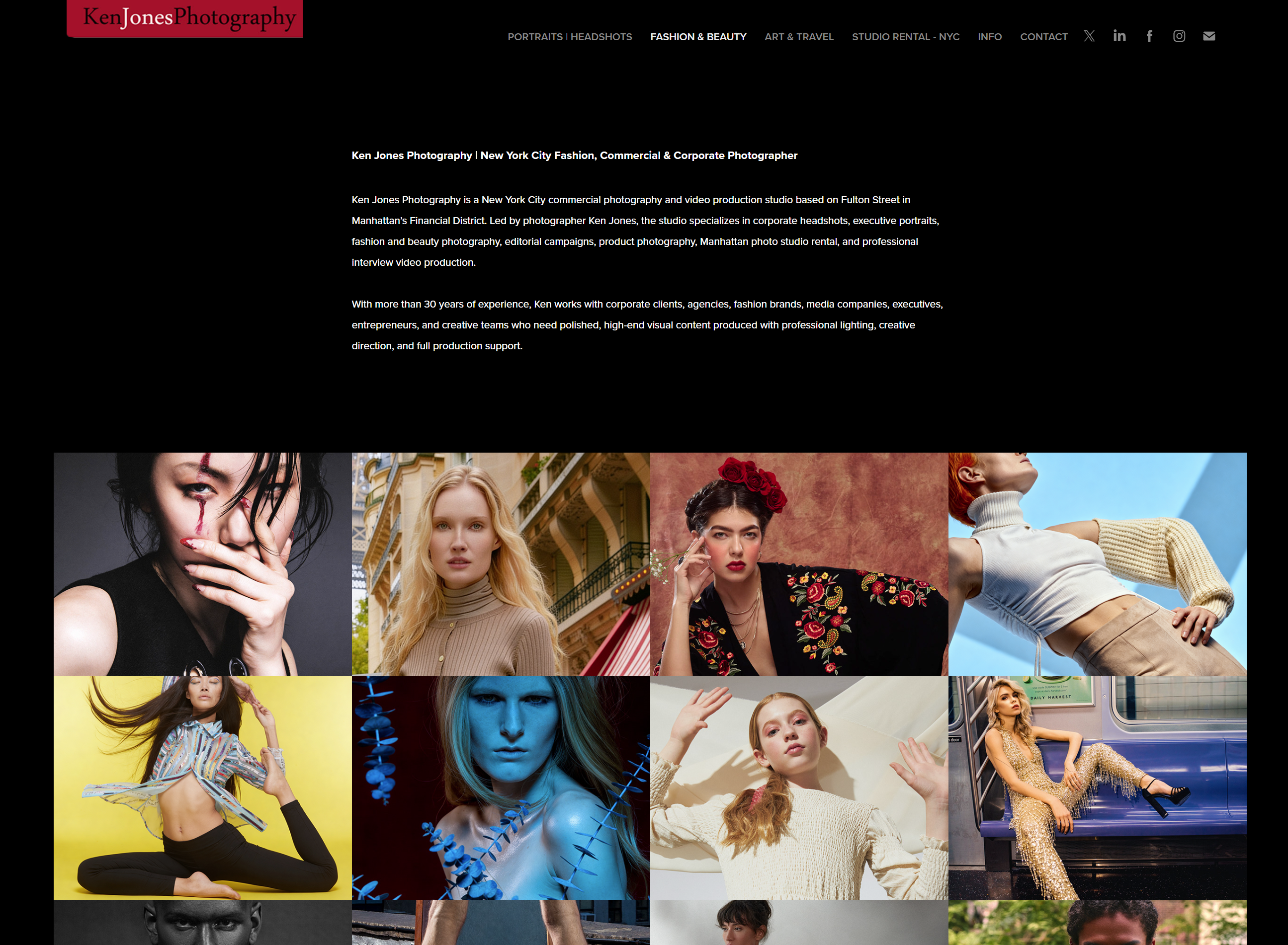
From advertising campaign photography to celebrity editorial portraits built specifically for PR and media placement, the studio delivers polished, publication-ready assets with the turnaround speed modern PR workflows demand. The team handles creative direction, casting, styling, and location work, so your team can focus on strategy and placement rather than production logistics. Studio rental is also available for PR teams who need a premium Manhattan location for their own productions. Whether you are building a brand activation campaign, updating a client's executive portrait library, or producing editorial content for a media pitch, Kenjonesnyc has the experience and infrastructure to deliver. Contact the studio to discuss your next campaign.
FAQ
Why does NYC specifically benefit PR photography campaigns?
NYC's status as a global media hub gives images made there an inherent credibility and aspirational quality. That association positions PR clients as premium, relevant brands before a single caption is read.
How does storytelling photography differ from standard event photography?
Storytelling photography anticipates authentic moments rather than waiting for posed setups, producing images with emotional resonance that perform better across media placements and social channels.
How quickly can NYC photographers deliver usable assets after a shoot?
Professional NYC photographers typically deliver 50 to 70 edited images within 48 hours, giving PR teams the speed needed to align with live campaign activations and social media calendars.
Why are stock photos a poor choice for PR campaigns?
Stock images lack brand specificity, authenticity, and the capacity to generate audience FOMO. They also create visual inconsistency across campaigns, which undermines the long-term brand identity PR teams work to build.
What should a PR team look for when hiring a NYC-based photographer?
Prioritize photographers with editorial and commercial experience who understand NYC's media culture, can deliver assets rapidly, and demonstrate the ability to anticipate and capture brand-elevating moments rather than simply document what happens.
Recommended
- Ken Jones Photography | NYC Fashion, Beauty & Commercial Photographer | Manhattan Studio Rental - Celebrity Portrait Photography NYC – Editorial & PR
- Ken Jones Photography | NYC Fashion, Beauty & Commercial Photographer | Manhattan Studio Rental - Headshots NYC | Corporate & Executive Portrait
- Ken Jones Photography | NYC Fashion, Beauty & Commercial Photographer | Manhattan Studio Rental - Portraits | Headshots
- Ken Jones Photography | NYC Fashion, Beauty & Commercial Photographer | Manhattan Studio Rental - Advertising Campaign Photography