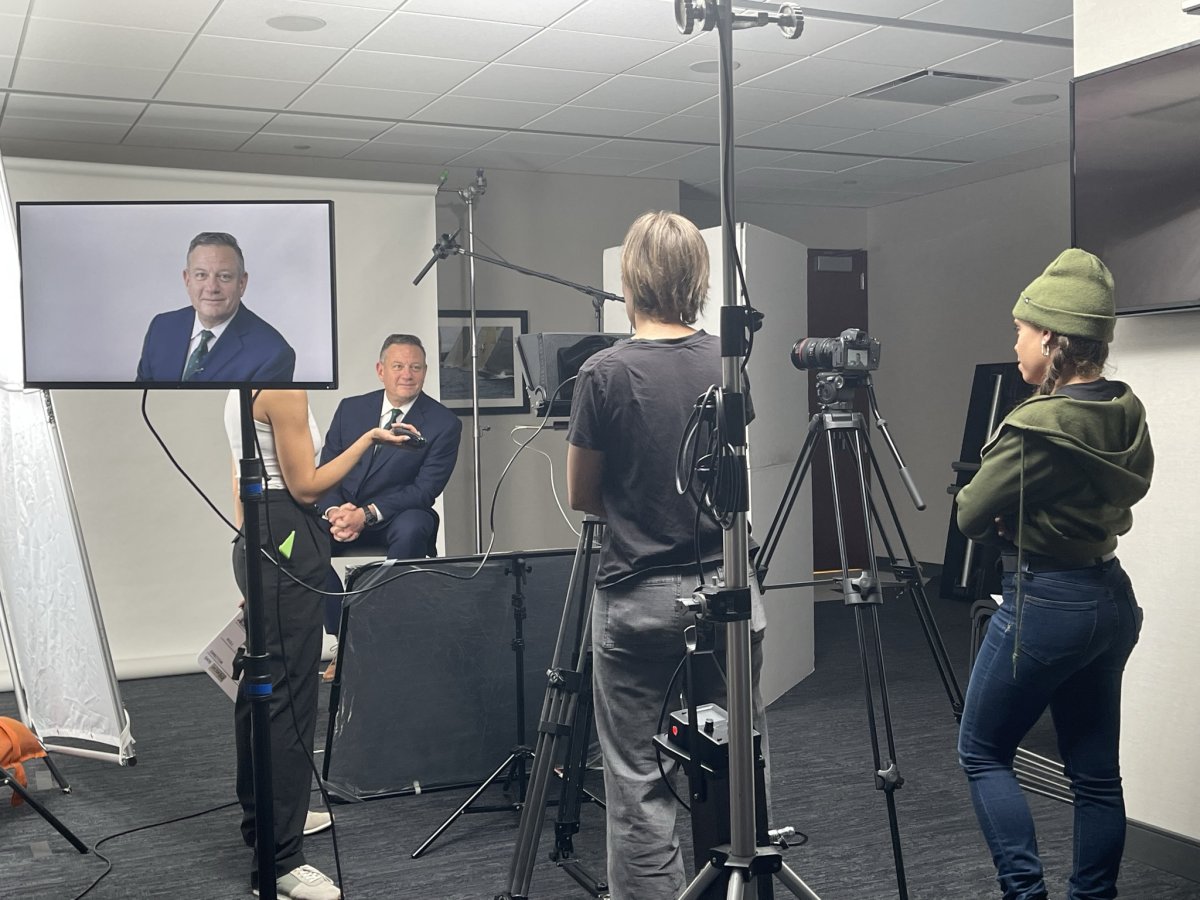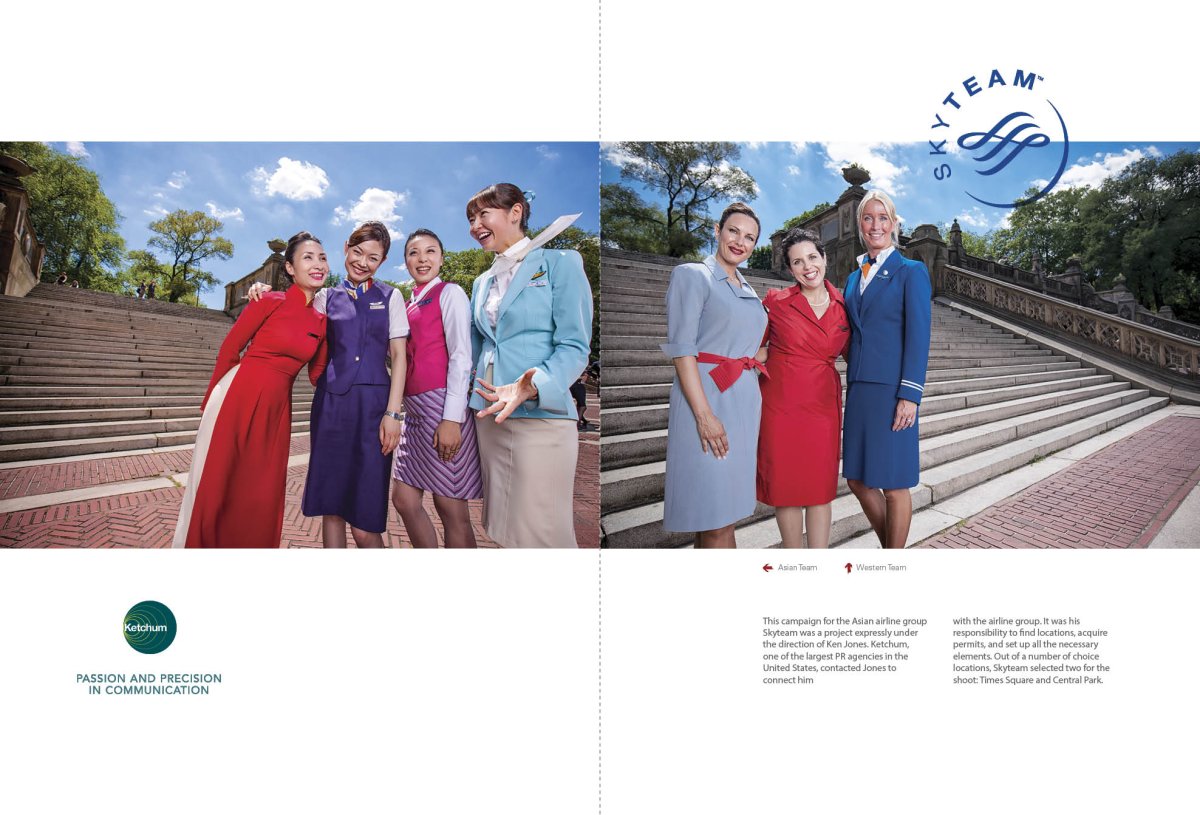
With U.S. creator ad spend projected to hit $37 billion in 2026, the margin for visual mediocrity has officially vanished. You know that a single national advertising campaign can cost upwards of $50,000, and the pressure to deliver a polished, high-end brand image is immense. Hiring a commercial photographer in a market as complex as New York City often feels like a high-stakes gamble between visionary art and logistical chaos. It's common to fear a poor ROI or struggle with inconsistent quality across different photography niches when your reputation is on the line.
Ken Jones, a New York City fashion and commercial photographer with over thirty years of experience, understands that technical mastery must meet strategic brand alignment. This guide will help you master the process of selecting and collaborating with a professional to elevate your brand’s identity while protecting your bottom line. You'll gain a clear understanding of the 2026 landscape, including the new $85 copyright registration fees, advertising day rates ranging from $3,000 to $10,000, and the streamlined production workflows required to maintain a sophisticated brand presence.
Key Takeaways
- Identify the critical distinction between retail photography and high-stakes B2B production to ensure your visual assets align with sophisticated corporate objectives.
- Master the evaluation process for hiring a commercial photographer by analyzing portfolio consistency and technical mastery in complex lighting and digital retouching.
- Streamline your production lifecycle through meticulous pre-production planning, including expert storyboarding, professional casting, and strategic location scouting.
- Navigate the legal nuances of commercial usage rights and licensing to protect your brand investment and maximize long-term ROI across all media platforms.
- Leverage full production support to transition from simple photo shoots to a systemized content strategy that delivers a polished, high-end brand identity.
What Defines a Professional Commercial Photographer in 2026?
In 2026, the definition of a professional has shifted from a technician with a camera to a strategist with a vision. Commercial photography is no longer just about taking pictures; it's a precise tool for brand storytelling designed to drive specific sales outcomes. Unlike retail photography, which focuses on personal milestones like weddings or family portraits, commercial work is a B2B partnership. It requires an understanding of market trends, consumer psychology, and technical precision that can scale across global platforms. When you're hiring a commercial photographer, you're looking for a production lead who can navigate the complexities of a $2.8 billion U.S. market.
The industry has evolved rapidly. With 83% of professionals now using AI in their weekly workflow, the value of a photographer lies in their ability to manage a "content system" rather than a one-off shoot. This evolution means the photographer must be a master of both the physical lens and the digital backend. They must ensure that every frame serves the brand's broader commercial objectives while maintaining a polished, high-end aesthetic that stands out in a crowded digital marketplace.
Commercial vs. Editorial: Knowing Your Objectives
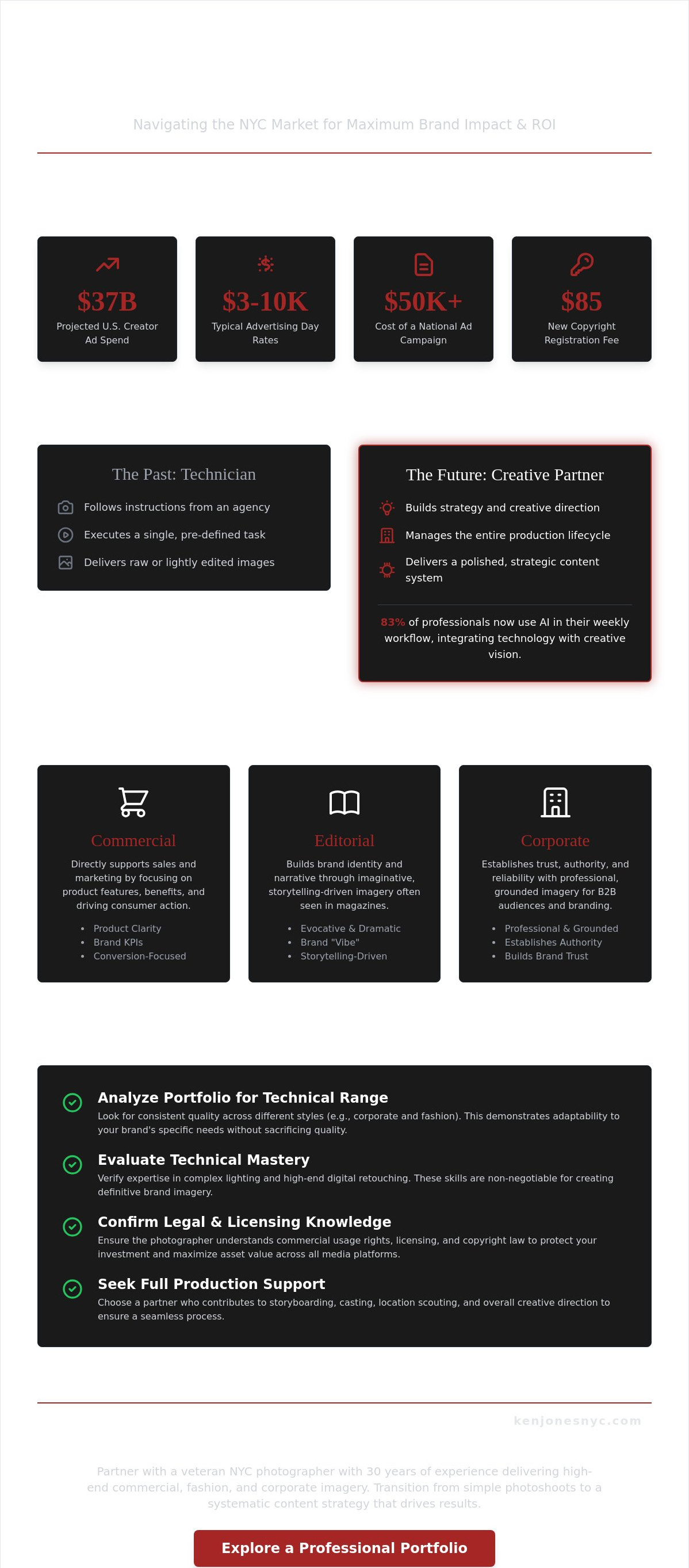
Commercial photography is the backbone of high-stakes advertising. It focuses on brand KPIs, product clarity, and conversion. Editorial photography, however, leans into the evocative and the imaginative. It's whimsical; it builds a narrative. Identifying which style suits your campaign is the first step in hiring a commercial photographer. Consider these distinctions:
- Commercial Advertising: Direct focus on product features, benefits, and call-to-action results.
- Fashion Editorial: Dramatic, storytelling-driven imagery often seen in high-end magazines to build brand "vibe."
- Corporate Branding: Professional, grounded imagery that establishes authority and reliability for B2B clients.
The Role of the Creative Partner
Ken Jones, a New York City fashion and commercial photographer, represents the shift toward the "creative collaborator." A simple camera operator follows instructions, but a creative partner builds them. With 30 years of experience in the NYC creative scene, a veteran understands that a shoot in a Manhattan studio or a gritty urban editorial requires more than just lighting. It requires full production support. Moving beyond the lens means the photographer contributes to creative direction, meticulously planning every detail from Profoto projector lighting to the nuances of digital retouching. This level of involvement ensures that the final assets aren't just beautiful images, but strategic tools that boost brand trust and conversion rates.
Critical Criteria for Your Commercial Photographer Selection
Selecting the right partner for your brand's visual identity goes far beyond identifying a pleasing aesthetic. When hiring a commercial photographer, you are vetting a production lead capable of managing high-stakes environments. You must scrutinize their portfolio for technical consistency across diverse niches. A true professional demonstrates a seamless transition between the grounded, polished look of corporate photography and the evocative, dramatic flair of fashion editorials. This versatility proves they can adapt to your brand's specific KPIs without sacrificing quality.
Technical proficiency in 2026 demands more than basic camera knowledge. It requires a mastery of complex lighting setups, such as Profoto projector lighting, and an expert hand in high-end digital retouching. These tools are essential for creating the hero shots that define national campaigns. Reliable professionals also possess a deep understanding of the legal landscape, including copyright protection for photographs, which is critical as registration fees are slated to rise to $85 in 2026. This knowledge ensures your brand investment is protected from the start. For those seeking a partner who balances artistic vision with logistical precision, exploring a professional commercial portfolio reveals the difference thirty years of experience makes.
Portfolio Deep-Dive: Beyond the Aesthetic
A sophisticated portfolio should showcase more than just beauty; it should demonstrate technical range. Look for evidence of full production support, ranging from polished corporate headshots to whimsical fashion lookbooks. Evaluate how the photographer handles technical challenges, such as high-contrast outdoor lighting versus a controlled high-resolution studio campaign. This versatility ensures they can handle your specific industry's nuances while maintaining a contemporary and high-end feel.
Technical Infrastructure and Studio Access
In the high-pressure NYC creative scene, studio access is a significant logistical advantage. A dedicated Manhattan studio provides a controlled environment for complex, multi-day shoots. Modern production requires non-negotiable features like soundproof spaces for corporate videos and cyc walls for seamless fashion backgrounds. Having immediate access to equipment rental, including high-resolution sensors and specialized Profoto modifiers, streamlines the production process and eliminates the delays often found with less integrated service providers.
Navigating the Production Lifecycle: From Concept to Retouching
Executing a high-end campaign requires a rhythmic, structured workflow that moves seamlessly from an abstract concept to a polished asset. When hiring a commercial photographer, you aren't just paying for the hours spent behind the lens. You're investing in a comprehensive production lifecycle. In a market as competitive as Manhattan, where a single production day for a national campaign can exceed $50,000, pre-production planning is the only way to safeguard your ROI. This phase involves meticulous storyboarding, professional casting, and securing New York City location permits well in advance of the first shutter click.
The business of photography has become increasingly complex, requiring the photographer to act as a production lead. Managing a crew of stylists, hair and makeup artists, and assistants is a prerequisite for success. During the shoot, the creative collaborator must balance technical precision, such as managing complex Profoto projector lighting setups, with evocative creative direction. This ensures that every frame captured aligns with the pre-approved creative brief and the brand's contemporary aesthetic.
Pre-Production and Creative Collaboration
Logistical mastery is what separates a veteran NYC photographer from a hobbyist. Manhattan shoots often involve navigating tight subway station permits or coordinating high-resolution studio sessions in the Financial District. A polished creative brief serves as the North Star for the entire team. It ensures that everyone, from the lead producer to the digital tech, understands the specific brand KPIs. Meticulous planning prevents costly delays and ensures that the 2026 brand manager receives a streamlined production experience without the stress of logistical failures.
The Finishing Touch: Digital Retouching
Digital retouching is the final, critical step in achieving a high-end, polished look. It's where the visionary spark of the shoot meets technical perfection. For executive portraits, the goal is balancing natural realism with commercial perfection. In fashion lookbooks, consistency is paramount. Each image must maintain a unified color grade and texture across multi-channel advertising campaigns. This phase isn't just about fixing flaws. It's about enhancing the dramatic and whimsical elements of the imagery to ensure it resonates with a sophisticated audience. Professional retouching guarantees that the final assets are ready for immediate deployment in print and digital media, maintaining the high standards expected of a New York City production.
The Business of Photography: Licensing and ROI
Hiring a commercial photographer is a strategic capital investment rather than a simple line-item expense. In a global photography services market projected to reach $81.83 billion by 2032, the value of an image is defined by its utility and its ability to generate revenue. For a brand manager, the goal is to secure assets that not only look polished and high-end but also carry the necessary legal permissions for multi-channel deployment. Understanding the distinction between work-for-hire and licensed imagery is essential for protecting your brand's long-term interests.
Licensing fees for commercial photography typically range from $250 to $10,000, depending on the scope of the campaign. For example, social media usage might cost between $50 and $250 per image, while a national print advertisement can command between $500 and $5,000 per asset. These costs are justified by the imagery's ability to drive conversion and establish authority in the NYC creative scene. Ken Jones, a New York City fashion and commercial photographer, leverages 30 years of experience to ensure that every contract is as meticulously structured as the lighting in a Manhattan studio shoot. If you are ready to discuss the specifics of your next campaign, you can request a custom production quote to align your budget with your brand's vision.
Demystifying Usage and Licensing
Usage rights define how, where, and for how long a brand can use an image. Most brand managers find that "buying the copyright" is an unnecessary expense. Instead, licensing allows you to pay only for the specific reach you need, whether that is digital, print, or social media. This flexibility allows you to scale your investment as a campaign proves its success. A veteran producer will help you navigate these terms, ensuring you avoid the pitfalls of automated copyright detection and takedowns that have become stricter on social platforms in 2026.
Measuring the ROI of High-End Visuals
The return on investment for high-end visuals is measured through increased brand trust and higher conversion rates. Professional corporate headshots, for instance, typically cost between $500 and $1,500, yet they function as a primary trust signal on platforms like LinkedIn. In the fashion sector, a dramatic and whimsical lookbook can significantly reduce long-term marketing costs by creating a library of versatile assets that can be repurposed across editorial campaigns and e-commerce product pages. By investing in a "content system" rather than a one-off shoot, you ensure that every dollar spent on production contributes to a unified and sophisticated brand identity.
Ken Jones: 30 Years of NYC Commercial Excellence
Ken Jones, a New York City fashion and commercial photographer, has spent over three decades refining the art of high-end production in the heart of the Financial District. This legacy of craftsmanship isn't just about time; it's about a consistent commitment to visionary work that meets the rigorous demands of Manhattan's business and fashion capitals. When hiring a commercial photographer, brand managers seek the reliability that comes with thirty years of navigating high-stakes environments. From the meticulous lighting of a corporate campaign to the whimsical energy of an editorial shoot, the work remains grounded in professional excellence and artistic integrity.
The studio on Fulton Street serves as a central hub for full-service production. It offers more than just a space to capture images. It provides comprehensive studio and equipment rentals, including specialized Profoto projector lighting and high-resolution digital tech support. This infrastructure allows for a streamlined production process that smaller, less established outfits simply can't match. As a creative collaborator, Ken Jones integrates himself into the brand's vision, ensuring that every project reflects the client's core identity while maintaining a contemporary, polished aesthetic.
The Manhattan Studio Advantage
Located steps from the city's major financial and creative centers, the studio provides a logistical edge for NYC firms, law offices, and creative brands. It's a professional-grade space designed for efficiency and high-end results. While the Fulton Street location is a constant linguistic and physical anchor, the team also maintains extensive on-location expertise. Whether your production requires a sunset shoot in Brooklyn or a high-resolution campaign in Queens, the focus remains on delivering a sophisticated visual narrative without the logistical friction often found in New York City productions.
Tailored Solutions for Every Brand
Every brand requires a unique visual language to stand out in the 2026 market. Executive portraits must project authority and professional competence, while fashion campaigns demand a dramatic and evocative spark to capture global attention. The services provided span the entire spectrum of visual storytelling, from branding and model portfolios to intricate lookbooks and corporate videos. This versatility ensures that your brand’s visual assets are consistent, sophisticated, and ready for deployment across all media platforms. If you're ready to elevate your brand's presence with a veteran NYC photographer, Book your session at our Manhattan studio today and experience the difference that thirty years of creative mastery brings to your next production.
Elevating Your Brand Narrative Through Strategic Production
Success in the 2026 market depends on your ability to distinguish between a mere camera operator and a true creative collaborator who understands your specific brand objectives. By prioritizing technical range and meticulous pre-production, you ensure that every frame captured in a Manhattan studio or on an urban editorial shoot serves a commercial purpose. The process of hiring a commercial photographer should result in a polished, high-end portfolio that drives trust and increases conversion rates across all digital and print platforms.
Ken Jones brings over 30 years of industry experience to every project, offering a sophisticated blend of professional authority and creative inspiration. With a full-service studio in Manhattan’s Financial District, the team provides the logistical mastery required for high-stakes corporate branding and dramatic fashion editorials. You deserve a production partner who values craftsmanship and reliability as much as you do. Partner with a visionary NYC photographer for your next campaign and transform your brand’s visionary spark into a tangible, high-performing reality. Your next campaign is an opportunity to define your legacy in the New York creative scene.
Frequently Asked Questions
How much does it cost to hire a commercial photographer in NYC?
NYC advertising day rates for hiring a commercial photographer typically range from $3,000 to $10,000 for the professional fee alone. A full production day for a national campaign can cost between $15,000 and over $50,000. These rates depend on the complexity of Profoto lighting setups, location permits, and the specific usage rights required to protect your brand's investment in the competitive 2026 market.
What is the difference between commercial and corporate photography?
Commercial photography focuses on promoting specific products or services to drive sales, often utilizing dramatic lighting and evocative creative direction. Corporate photography centers on building a professional brand identity through executive headshots and office environment imagery. While both require a polished aesthetic, commercial work usually demands a higher level of full production support and specialized technical infrastructure to meet high-stakes advertising goals.
Do I own the photos after a commercial shoot?
Most brands don't own the copyright but instead purchase specific usage licenses for digital, print, or social media platforms. Licensing fees can range from $250 to $10,000 per asset depending on the scope. This model is more cost-effective as it allows you to scale your investment based on campaign reach. The US Copyright Office proposed an $85 fee for group registration in March 2026 to protect these assets.
How long does a typical commercial photography session take?
A standard production day typically lasts between eight and ten hours, though half-day sessions of four hours are available for smaller assignments. Complex fashion editorials or national advertising campaigns often require multiple days to accommodate intricate Profoto lighting setups and talent management. Meticulous pre-production planning ensures that even the most ambitious schedules remain rhythmic and structured to meet tight corporate deadlines in the heart of Manhattan.
What should I look for in a commercial photography portfolio?
Look for technical consistency and a clear mastery of lighting across diverse visual niches. A sophisticated portfolio should demonstrate the ability to handle high-resolution studio campaigns and gritty urban editorials with equal precision. Evaluate the hero shots for their emotional impact and technical clarity. Ensure the photographer has relevant experience in high-end production and digital retouching to guarantee a polished final product for your brand.
Why should I hire a professional instead of using an AI image generator?
Hiring a commercial photographer ensures strategic brand alignment and legal certainty that AI generators cannot provide. While 83% of professionals use AI tools for editing, human creative collaborators provide the visionary spark and logistical management necessary for high-stakes NYC shoots. Professional shoots also avoid the copyright litigation risks currently surrounding AI-generated works, protecting your brand's long-term visual identity and ensuring your imagery remains unique.
Does Ken Jones Photography offer on-location shoots outside of Manhattan?
Ken Jones Photography provides on-location expertise across Brooklyn, Queens, and the greater New York City area. While the Manhattan studio in the Financial District is a primary hub for corporate and fashion work, the team frequently executes shoots in diverse urban environments. This flexibility allows brands to capture the gritty energy of the city or the polished atmosphere of a specific corporate headquarters while maintaining a high-end aesthetic.
What is included in high-end digital retouching services?
High-end digital retouching includes expert color grading, texture refinement, and the meticulous balancing of natural realism with commercial perfection. This process ensures a unified aesthetic across lookbooks and multi-channel advertising campaigns. It goes beyond simple blemish removal to enhance the dramatic and whimsical feel of the imagery. This ensures every final asset meets the rigorous standards of the NYC creative scene and projects a contemporary brand image.