
Most photographers entering the fashion world assume the job is straightforward: find the clothes, find the model, make it look good. That assumption is where average work begins and ends. Fashion photography is more than clothes. It always has been. The most enduring fashion images in history carry emotional weight, cultural context, and human truth that has nothing to do with a hemline or a silhouette. Fashion imagery interprets emotions and cultural narratives, not just aesthetics. If you want to create work that actually resonates, understanding that distinction is where the real creative development starts.
Table of Contents
- Key takeaways
- Why fashion photography is more than clothes
- Pre-production as a storytelling foundation
- Photographers who proved the point
- Lighting, composition, and movement as narrative tools
- Applying storytelling to your fashion photography
- My perspective on storytelling and the work that lasts
- Work with a studio that leads with story
- FAQ
Key takeaways
| Point | Details |
|---|---|
| Storytelling drives impact | Fashion photography that builds narrative and emotional context creates stronger brand loyalty than product display alone. |
| Pre-production shapes the story | Mood boards with non-visual elements align every collaborator around a unified emotional tone before the shoot begins. |
| Light is an architectural tool | Skilled photographers use lighting to define space and mood so that the composition holds meaning even without the subject. |
| Personality outperforms glamour | The most celebrated fashion images prioritize the subject's humanity over retouched perfection or ornate styling. |
| Concept comes before clothing | Starting with an emotion or narrative, rather than a garment, produces images with lasting resonance and cultural relevance. |
Why fashion photography is more than clothes
The art of fashion photography sits at an unusual intersection. It serves commercial goals while reaching for artistic ones. A lookbook needs to sell, but an editorial needs to make someone feel something. The best fashion photography does both at the same time, and the difference between work that achieves that and work that simply documents a garment comes down to narrative intent.
The main purpose of fashion photography is to promote clothing and beauty products through visually compelling images that engage audiences. But "visually compelling" is not a styling choice or a location. It is a story that the viewer enters. When you strip away that narrative dimension, you are left with a catalog, not a photograph.
There are several core elements that separate fashion photography as an art form from simple product imaging:
- Narrative storytelling. Every image should answer the question: who is this person, what are they feeling, and why does that moment matter? A trench coat photographed against a gray wall tells you nothing about the character wearing it. The same coat photographed in a moment of deliberate stillness, with the model's gaze fixed on something just outside the frame, tells you everything.
- Lighting and composition as emotional language. The way you light a subject and arrange visual elements in frame communicates mood before a viewer consciously processes the clothing. Deep shadows signal tension. Open, diffused light suggests vulnerability or ease. These are choices, not defaults.
- Props and environment. The importance of props in photography is often underestimated. A single prop placed intentionally, a crumpled letter, a vintage telephone, a glass of water catching light, can shift the entire reading of an image. Environment works the same way. A model in couture standing in a working industrial space creates visual tension that a neutral studio backdrop cannot produce.
- Personality and authenticity. The subject's humanity should be legible in the final image. Stiffness and performance read as stiffness and performance. The camera is honest about that.
- The contrast between commercial and editorial work. Commercial fashion photography prioritizes clarity, product visibility, and brand consistency. Editorial fashion photography has room to take risks, to embed social commentary, to show clothing in contexts that challenge rather than simply flatter.
Pro Tip: When reviewing your fashion images, cover the clothing with your hand and ask whether the photograph still has something to say. If it collapses without the garment, the story was never there to begin with.
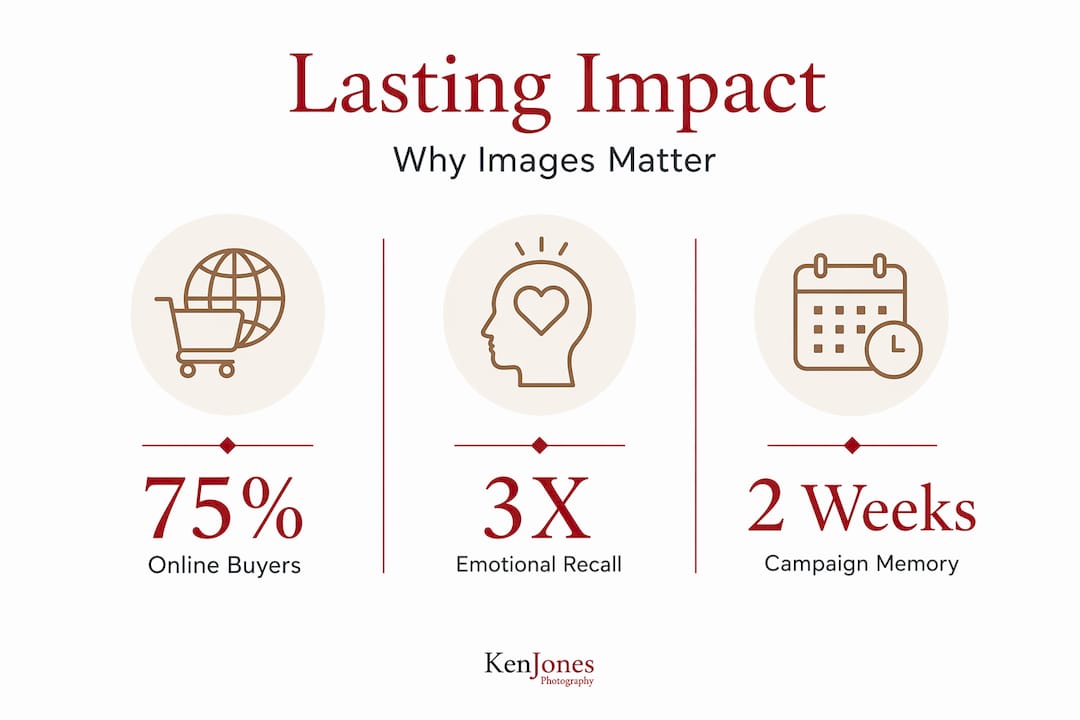
Over 75% of online buyers rely heavily on product imagery when making purchasing decisions, yet the images that build lasting brand loyalty go beyond product display. Emotional storytelling in fashion is not a stylistic preference. It is a business advantage.
Pre-production as a storytelling foundation
Great fashion photography does not begin when you press the shutter. It begins weeks earlier, often in a quiet room with reference images pinned to a wall and conversations happening between a photographer, a stylist, a makeup artist, and sometimes a model. This phase shapes everything that follows.
The pre-production process for narrative fashion photography typically follows a sequence that moves from abstract feeling to concrete visual decisions:
- Define the emotional core. Before selecting a location or pulling garments, identify the feeling you want the final images to produce. Longing? Quiet confidence? Defiant joy? Every subsequent decision should serve that feeling.
- Build a mood board that goes beyond imagery. Effective fashion storytelling requires mood boards that incorporate lyrics, textures, emotional cues, and color impressions alongside visual references. A line from a Leonard Cohen song can communicate a color temperature more precisely than a paint chip.
- Establish a shared language with your collaborators. Mood boards replace ambiguous adjectives with concrete visual examples, creating a shared creative language so that every person in the room understands the intended emotional tone before a single light is set up.
- Choose your color palette deliberately. Color carries psychological weight. Muted, desaturated tones suggest restraint and melancholy. High-contrast, saturated palettes read as energy and confrontation. Your palette should match your emotional narrative, not simply complement the clothing.
- Plan for contrast and tension. Some of the most powerful fashion images work because something in the frame does not quite belong. A delicate silk dress in a concrete stairwell. A model in formal tailoring eating street food. These contrasts give viewers something to think about.
This collaborative, pre-production approach is what moves fashion photography beyond a clothing presentation. By the time you arrive on set, the story already exists. You are there to capture it, not invent it on the spot.
Pro Tip: Include one non-visual element in every mood board you create, whether a piece of music, a short passage of writing, or even a scent description. Non-visual references force collaborators to engage emotionally rather than just visually, which produces more consistent, committed performances from everyone on set.
Photographers who proved the point
The clearest argument that fashion photography is more than clothes comes from the photographers who built careers on that exact belief.
Peter Lindbergh is the most cited example, and for good reason. Lindbergh prioritized authenticity and humanity rather than glamour or heavy retouching throughout his career. He photographed the supermodels of the late 1980s and early 1990s not as fashion vehicles but as people. His images showed Naomi Campbell and Linda Evangelista in ways that felt real, sometimes raw, always deeply human. The clothes were present. They were not the point.
"Lindbergh believed that a photograph should free women from the concept of eternal youth and beauty, confronting the truth of who they are." This philosophy reshaped what fashion photography could aspire to be.
His approach produced images with cultural staying power that pure product photography never achieves. Those images are still referenced, still studied, and still feel current decades later. That is the measure of work built around human truth rather than seasonal trend.
Martin Parr represents a different but equally instructive perspective. Known primarily as a documentary photographer, Parr brought social observation and a dry, affectionate wit to fashion editorial work. Successful fashion photographers balance authenticity and personal vision while managing the industry's contradictions. Parr's fashion work reads as both insider and outsider at once, which gives it a tension that purely commercial fashion imagery cannot replicate.
Several lessons emerge from studying photographers who have pushed beyond fashion photography as mere clothing display:
- Minimalism in styling often produces stronger emotional clarity than maximalism. When there is less to distract the eye, the viewer's attention goes to the face, the posture, the relationship between subject and space.
- The setting carries as much narrative weight as the clothing. Lindbergh's outdoor and industrial locations made his subjects feel grounded in the real world rather than suspended in aspirational fantasy.
- Retouching decisions are narrative decisions. Choosing to show texture in skin, to keep the motion blur in a gesture, to leave an imperfection visible, tells the viewer something specific about how the photographer sees the subject.
- The relationship between photographer and subject shapes everything. Subjects who trust the photographer give more. They take risks with their expression. They stop performing and start existing in front of the lens.
Lighting, composition, and movement as narrative tools
Beyond philosophy, fashion photography's storytelling capacity depends on specific technical and artistic choices made frame by frame. Lighting, composition, and the direction of a model's movement are not neutral decisions. Each one either supports or contradicts the story you are trying to tell.
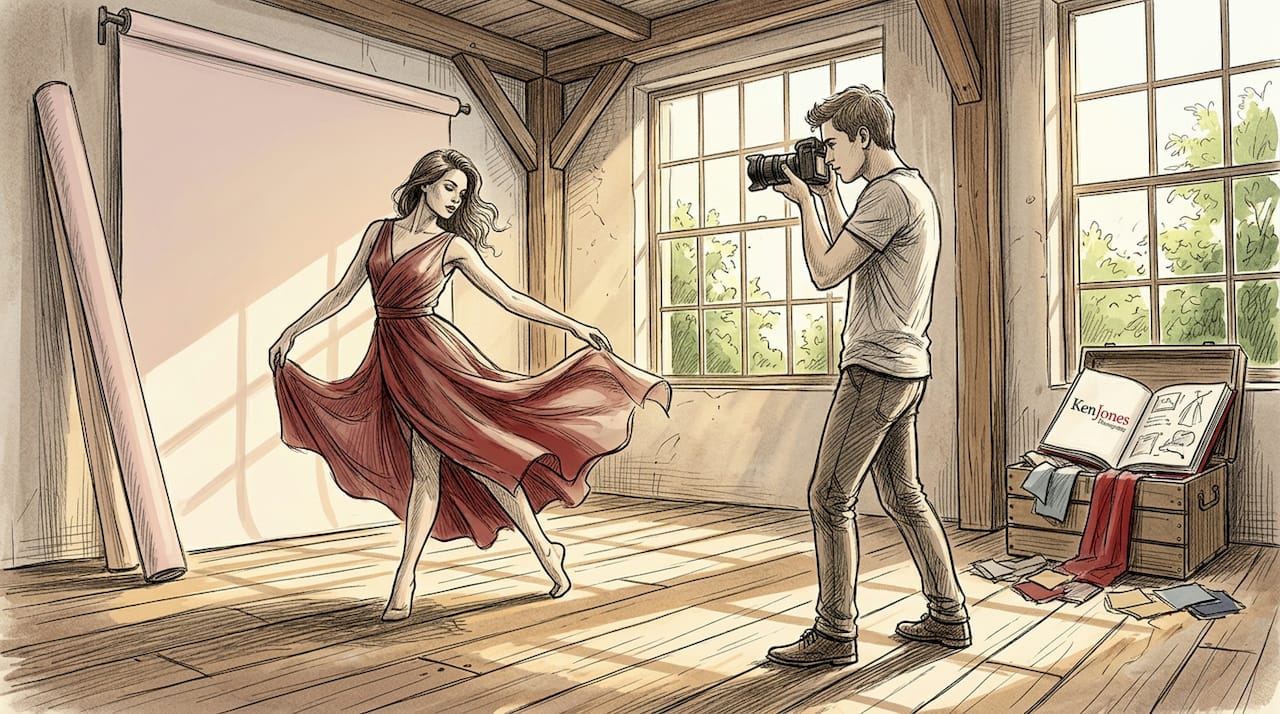
Lighting in fashion photography functions as an organizing principle, defining edges and spatial relationships. The standard test used by master photographers: if you removed the subject and the clothing entirely, would the composition still be interesting? If the answer is no, the lighting is serving the garment rather than the story.
The table below shows how different lighting approaches map to different narrative intentions:
| Lighting approach | Narrative effect |
|---|---|
| Single source with deep shadow | Tension, mystery, psychological depth |
| Broad, diffused fill light | Openness, approachability, soft vulnerability |
| Harsh overhead or directional light | Drama, confrontation, raw energy |
| Practical light sources in frame | Intimacy, realism, environmental presence |
| Backlight with visible lens flare | Nostalgia, warmth, a sense of revelation |
Using a single light modifier maintains narrative consistency by keeping the viewer's attention on the model's performance rather than competing visual elements. Simplicity in lighting is not a constraint. It is a tool for focus.
Compositional choices function the same way. Centering a subject and filling the frame creates a direct, confrontational energy. Placing the subject off-center with negative space on one side suggests anticipation, longing, or uncertainty. The viewer's eye moves through the frame differently depending on where you place the weight, and that movement produces a feeling before a single conscious thought occurs.
Model direction ties all of this together. Encouraging purposeful, natural movement rather than held poses produces expressions and body positions that carry genuine feeling. A model mid-turn, caught between two positions, reads as alive in a way that a static pose rarely achieves. How to style fashion shoots at the highest level means directing the whole person, not positioning a garment on a stand.
Pro Tip: Give models a specific scenario or emotional memory to hold in mind rather than a pose to hit. Ask them to think about walking into a room where someone they have not seen in years is standing near the window. The physical response to that instruction produces something real that pure pose direction cannot manufacture.
Applying storytelling to your fashion photography
Understanding narrative fashion photography intellectually is useful. Applying it on a shoot is the harder work. Here is a framework for bringing storytelling principles into your actual creative practice:
- Start with an emotion, not a garment. Before you know what the model is wearing, decide what the viewer should feel when they look at the finished image. Write that feeling down. Let it be your anchor throughout the shoot day.
- Choose props and environments that carry meaning. The importance of props in photography extends beyond visual interest. A prop that connects to the emotional concept reinforces the narrative. A prop selected for visual texture alone creates distraction. Ask whether every element in the frame earns its place.
- Collaborate openly and specifically. Share your concept with your entire creative team, including the stylist, the hair and makeup artist, and the model, before the day of the shoot. Use your mood board as the reference point. When everyone understands the emotional goal, the decisions made on set align naturally.
- Build in time to iterate. The frames that carry the most narrative weight rarely come in the first twenty minutes. Give the shoot room to evolve. The model relaxes, the light settles, and the collaboration deepens when you are not racing against a fixed shot list.
- Review images during the shoot with your story in mind. Do not evaluate frames based only on technical quality. Ask whether each image advances the narrative or simply documents a look. Visual storytelling principles apply directly to fashion: a sequence of images should feel like chapters, not isolated moments.
- Seek coherence across the set. A strong editorial has a point of view that remains consistent from the opening frame to the last. That coherence is what separates editorial work from a collection of nice images.
The practical difference between photographers who create compelling fashion narratives and those who produce technically proficient clothing documentation is simply this: one group makes decisions based on the story, and the other makes decisions based on the frame in front of them.
My perspective on storytelling and the work that lasts
I have spent more than 30 years behind the lens working with fashion brands, modeling agencies, and editorial clients, and the pattern I have seen again and again is this: the work that clients come back to, the images that models put in their books and keep there for a decade, the photographs that brands use long past their intended campaign window, are never the technically perfect clothing shots. They are the ones where something human happened.
Early in my career, I thought a great shoot was a technically flawless shoot. Correct exposure, clean light, garment visible and flattering, model hitting the marks. That is a fine set of standards for catalog work. It is not enough for anything with lasting value.
What shifted for me was starting to treat the emotional concept as seriously as the technical plan. I began asking, before every shoot, what this story was actually about, not what it was trying to sell. That one change in framing altered how I communicated with models, how I built my pre-production, and what I considered a successful frame versus a safe one.
The hardest thing to convince a brand of is that investing in narrative depth serves commercial goals better than investing purely in product clarity. Storytelling drives real business growth precisely because emotional connection creates retention in a way that product display cannot. I have seen this play out in client work over and over.
The photographers who are building reputations that will matter in ten years are not the ones with the best gear or the cleanest retouching pipeline. They are the ones who have something to say and have learned to say it through a frame. Push past technical mastery. The equipment question is the easy one. The harder and more rewarding question is always: what does this image mean?
— Ken
Work with a studio that leads with story
At Kenjonesnyc, every fashion photography project begins with a concept, not a shot list. With over 30 years of production experience based in Manhattan's Financial District, the studio brings creative direction, casting, styling coordination, and full technical capability to every editorial and commercial engagement.
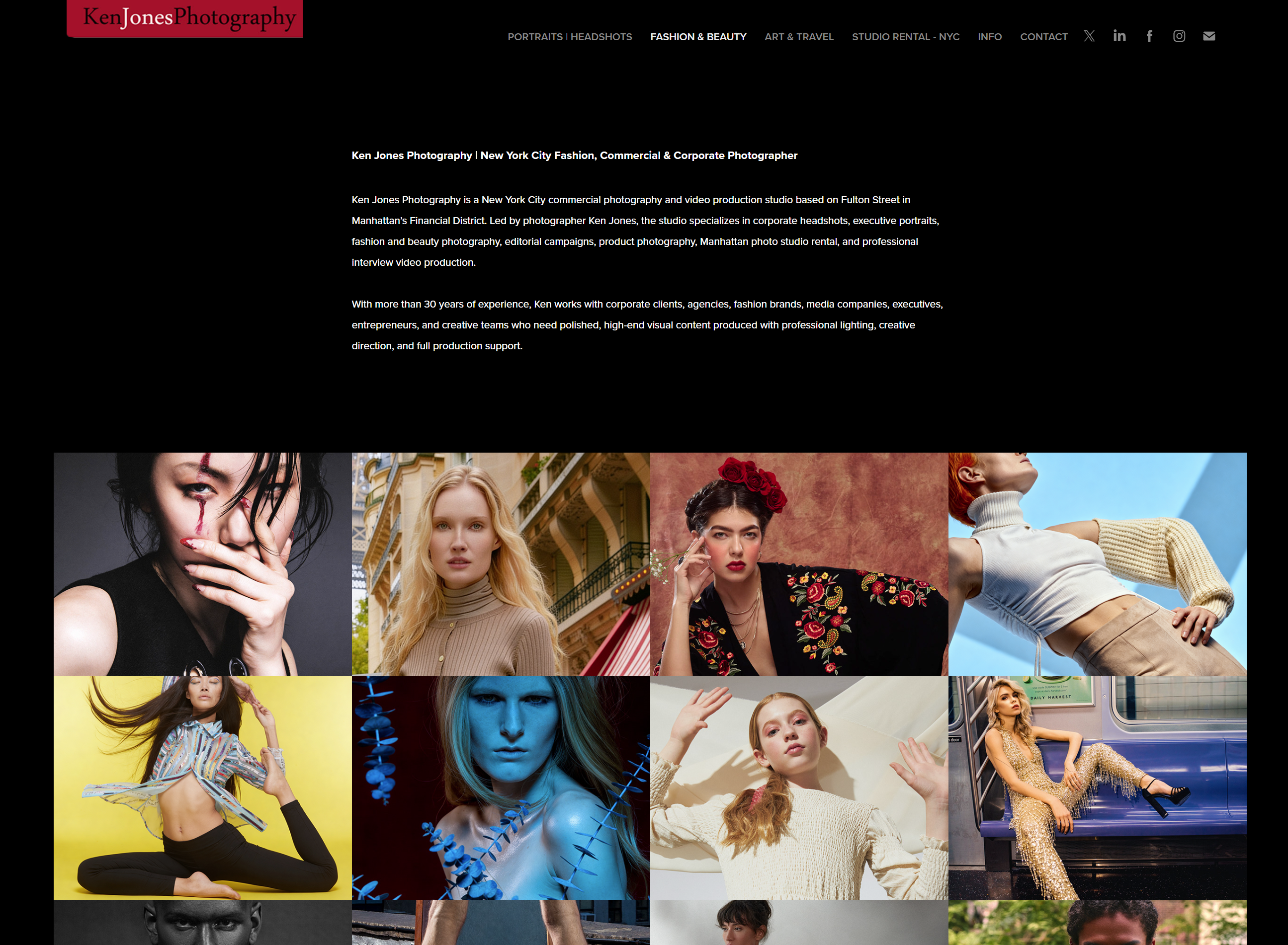
Whether you are producing a luxury fashion editorial or a brand campaign that needs to carry emotional weight across multiple platforms, Ken Jones Photography builds images that go beyond clothing display. Explore the Fur and Lace editorial to see how narrative fashion photography translates to finished work, or review the Naked Winter project for an example of how storytelling and visual tension work together in a single cohesive body of images. To discuss your next project, reach out directly through kenjonesnyc.com.
FAQ
What makes fashion photography more than just clothing display?
Fashion photography communicates emotion, personality, and cultural context through lighting, composition, and narrative direction. The most impactful fashion images reveal human stories and social commentary that exist independently of the garments shown.
How does a mood board improve fashion photography storytelling?
A mood board gives every collaborator, including the stylist, makeup artist, and model, a concrete reference for the intended emotional tone. This shared foundation prevents the shoot from defaulting to generic results and keeps every decision anchored to the narrative.
Why do top fashion photographers avoid heavy retouching?
Peter Lindbergh's approach demonstrated that authenticity and naturalism create more lasting emotional impact than technical perfection. Heavy retouching removes the human qualities that give an image its power.
How does lighting contribute to emotional storytelling in fashion?
Lighting defines spatial depth, shapes mood, and directs viewer attention before any conscious reading of the image occurs. A composition built on strong lighting holds narrative meaning even when the subject or garment is removed from consideration.
What is the practical difference between editorial and commercial fashion photography?
Commercial fashion photography prioritizes product clarity and brand consistency for direct sales purposes. Editorial fashion photography allows for social commentary, narrative risk, and artistic expression that shapes how audiences perceive and connect with a brand over time.
Recommended
- Why Lighting Defines Fashion Photography Results
- Ken Jones Photography | NYC Fashion, Beauty & Commercial Photographer | Manhattan Studio Rental - Fur and Lace Editorial | Luxury Fashion Photography
- Ken Jones Photography | NYC Fashion, Beauty & Commercial Photographer | Manhattan Studio Rental - Furs | Naked Winter – Fashion Editorial Photography NYC
- Ken Jones Photography | NYC Fashion, Beauty & Commercial Photographer | Manhattan Studio Rental - Ken Jones Photography Fashion & Commercial Photographer