
Most professionals assume a corporate headshot session is a quick, transactional experience. You show up, someone points a camera at you, and you leave. In reality, understanding how corporate headshot sessions work reveals something far more deliberate and client-focused. From pre-session preparation to post-production delivery, every step in the corporate headshot process is designed to produce an image that represents you accurately and professionally. And the stakes are real: profiles with professional photos receive 21 times more views on LinkedIn than those without.
Table of Contents
- Key takeaways
- How corporate headshot sessions work: session types and timing
- Preparing for your corporate headshot session
- The technical setup behind professional headshot sessions
- What happens after the session
- Traditional sessions versus AI-generated headshots
- My perspective on what professionals consistently overlook
- Work with Kenjonesnyc for your next corporate headshot session
- FAQ
Key takeaways
| Point | Details |
|---|---|
| Session length varies by format | Individual sessions run 30 to 90 minutes; team headshot days allocate 5 to 15 minutes per person. |
| Preparation directly affects results | Ironed clothing, backup outfits, and a clear mindset reduce delays and improve final image quality. |
| Tethered shooting speeds up approval | Real-time image review on set eliminates guesswork and significantly reduces reshoot requests. |
| Retouching should look natural | Professional retouching focuses on polished presentation without altering your recognizable appearance. |
| Headshots need periodic updates | Professional headshots serve as effective marketing assets for approximately two to three years before a refresh is recommended. |
How corporate headshot sessions work: session types and timing
Not all corporate headshot sessions follow the same structure. The format depends on who is being photographed, how many people are involved, and what level of creative direction the shoot requires. Understanding these distinctions helps you schedule realistically and set accurate expectations for your team.
Individual sessions offer the most flexibility. Individual sessions typically last between 30 and 90 minutes, giving the photographer time to experiment with lighting angles, coach expressions, and explore multiple background options. This format suits executives, partners, speakers, and anyone whose image carries significant visibility in the company's public-facing materials.
Team or company headshot days operate very differently. These are logistically demanding productions where efficiency is everything. Team days allocate roughly 5 to 15 minutes per person, meaning a team of 20 can be photographed in a single morning. The photographer does not change the creative setup between subjects. Instead, the lighting, background, and camera position remain fixed so that everyone's images share a consistent, professional look.
Several factors influence overall session length regardless of format:
- Number of approved looks or outfit changes per person
- Whether on-site image review is built into the schedule
- The number of backgrounds or lighting setups requested
- Staging and queue management for larger teams
- Photographer staffing, including assistants handling logistics
For high-volume headshot days, experienced photographers schedule the majority of subjects during morning and early afternoon hours to maintain throughput and keep energy levels consistent. Productivity and attention tend to drop after lunch, and a slower pace late in the day can push the entire schedule off track.
Pro Tip: If you are coordinating a team shoot, create a printed schedule and assign a point person on your side to manage the queue. A waiting area near the set, where subjects can review wardrobe and grooming before stepping in front of the camera, saves significant time.
Preparing for your corporate headshot session
Most people are surprised by how much preparation influences the final result. The photographer controls the lighting and the technical execution. But what you bring to the session in terms of wardrobe, grooming, and mental readiness shapes everything else.
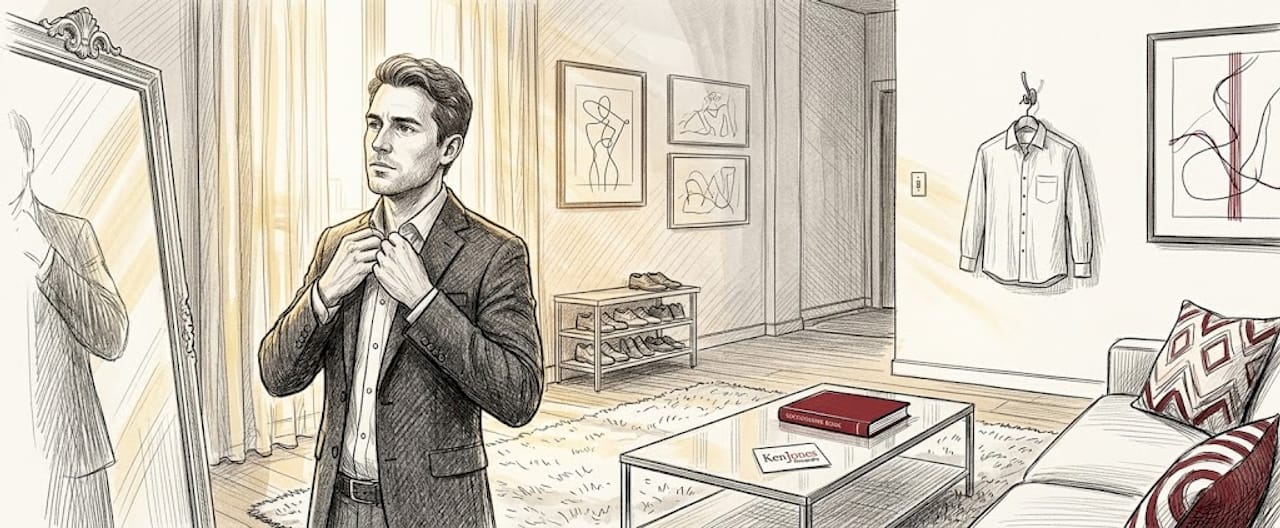
Wardrobe is where most clients underestimate the details. Wrinkle removal is the most common retouching request, which means showing up in a freshly pressed outfit is not optional. Iron everything the night before. Pack a backup outfit in a complementary color so you have options on set without disrupting the schedule.
A few practical wardrobe guidelines worth following:
- Choose solid colors or subtle patterns. Bold prints compete with your face.
- Avoid bright white and neon colors near your face, as they create unwanted reflections.
- Bring a second option in a different neckline or collar style to vary the look.
- Keep accessories minimal. Jewelry and accessories that move or catch light become distractions.
- Dress to match the professional context where the image will be used, whether that is a law firm website, a startup's team page, or a speaking bio.
Grooming also matters more than most people realize. For men, a fresh haircut and a clean shave or well-groomed beard make a measurable difference. For women, hair and makeup should reflect your day-to-day professional appearance. Authenticity in corporate headshots is critical. Overly styled or costume-like appearances reduce the impact of personal branding because they no longer look like you.
On set, expect to be coached. The photographer will direct your posture, chin placement, and expression continuously throughout the shoot. Vocal cues like "chin forward and down" and "relax your shoulders" are standard. This is not criticism. It is precision. The difference between a strong headshot and an average one often comes down to a two-degree adjustment in how you hold your jaw.
Pro Tip: Hydrate well the day before and the morning of your session. Well-hydrated skin photographs more evenly and requires less retouching. Avoid heavy sodium meals the night before, as facial puffiness is one of the harder things to address in post-production.
The technical setup behind professional headshot sessions
Understanding what happens behind the camera helps you appreciate why professional headshots look the way they do. The technical setup during a corporate headshot session is not improvised. It is planned, tested, and calibrated before the first subject steps in front of the lens.
Here is how a well-run corporate headshot setup typically comes together:
- Pre-lighting setup. The photographer establishes a primary lighting configuration before any subject arrives. This usually involves a key light to create dimension, a fill light to soften shadows, and a background light to separate the subject from the backdrop.
- Camera and tethering configuration. The camera connects directly to a laptop or monitor on set via tethered shooting. Every image appears on the screen immediately after capture, allowing the photographer and client to review composition, expression, and exposure in real time.
- Background selection and consistency. The background is set and locked in. For team shoots, this means every employee will share the same background, which supports portfolio consistency across the company website, LinkedIn, and press materials.
- Test shots and calibration. Before any paid session time begins, the photographer runs test shots to confirm exposure, white balance, and depth of field. This step prevents surprises mid-session.
- Live review during shooting. The tethered monitor allows instant client image review, meaning the subject can see select frames during short breaks and provide direction. This reduces second-guessing and almost eliminates the need for reshoots.
Studio setup versus mobile studio
A common decision in the corporate headshot process is whether to shoot in a dedicated photography studio or bring the setup on location to a client's office. Each approach has clear trade-offs.
| Setup type | Best for | Key advantage | Key limitation |
|---|---|---|---|
| Dedicated studio | Individual or small team sessions | Controlled environment, full equipment access | Subjects must travel to the studio |
| Mobile studio | Large teams or company headshot days | Convenience, minimal staff time lost | Requires advance space planning at the office |
| Natural light on location | Environmental or lifestyle headshots | Authentic, contextual appearance | Weather and light dependent |
Mobile studio setups with professional lighting and tethered shooting are now the standard for corporate clients who want quality results without asking their entire staff to leave the building. When the equipment comes to you, scheduling becomes simpler and the overall experience is less disruptive to operations.
What happens after the session
The session ends. The real work is just beginning. The post-session process in the corporate headshot workflow covers image selection, retouching, delivery, and knowing when to come back for an update.
Image selection typically happens in one of two ways. Either the client receives a curated gallery of proofed selects for review, or an on-site editing review takes place before the session wraps. On-site review is preferable when possible because it catches issues while everyone is still present and can be corrected immediately.
Retouching in professional headshot work follows a clear principle: improve what is temporary, preserve what is permanent. Flyaway hairs, clothing wrinkles, and skin blemishes are fair game. Structural alterations to facial features are not. The goal is a polished version of you, not a different person.
Typical turnaround timelines for corporate headshot delivery:
- Proof gallery: 24 to 48 hours after the session
- Final retouched images: 3 to 5 business days after selection
- Rush delivery: Available in some cases within 24 hours at additional cost
Final images delivered within 24 to 48 hours for proofing, with personally managed retouching, consistently raises client satisfaction and reduces back-and-forth revision cycles. Speed matters, particularly for executives who need images for upcoming press coverage or speaking events.
How often should you update your headshots? Most professionals let theirs run too long. Professional headshots remain effective as marketing assets for approximately two to three years. After that, changes in appearance, hairstyle, or professional context mean the image no longer accurately represents who you are today.
| Trigger | Recommended action |
|---|---|
| 2 to 3 years since last session | Schedule a refresh session |
| Significant appearance change | Update immediately |
| Career transition or rebrand | New images to match new context |
| Outdated background or styling | Reshoot to modernize |
Traditional sessions versus AI-generated headshots
The conversation around AI-powered headshot tools has grown quickly. These platforms generate studio-quality images from a set of uploaded selfies in minutes, at a fraction of the cost of a professional session. For remote teams, startups, or budget-conscious individuals, the appeal is real and worth examining honestly.
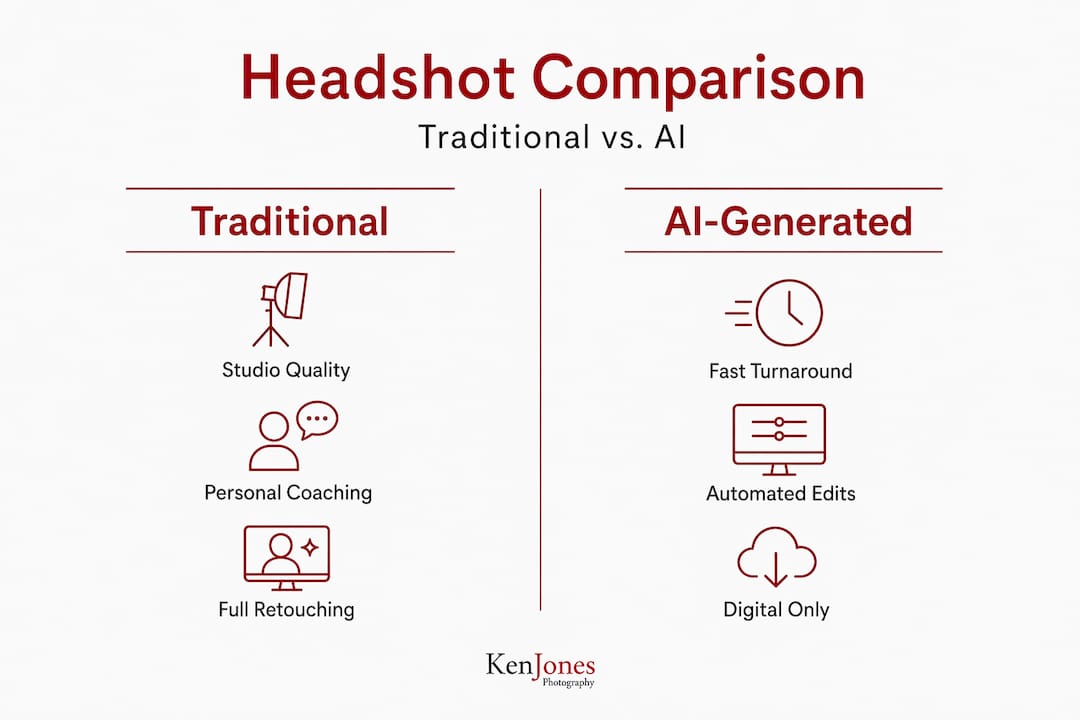
Here is how the two approaches compare on the factors that matter most for professional branding:
| Factor | Traditional session | AI-generated headshot |
|---|---|---|
| Image quality | High, with precise lighting control | Variable, depends on source photos |
| Authenticity | Strong, genuine expression coaching | Often appears slightly artificial |
| Turnaround | 1 to 5 business days | Minutes to hours |
| Cost | Higher, reflects time and expertise | Lower, often subscription or per-image |
| Consistency for teams | Excellent, matched setup across all subjects | Inconsistent across different source photos |
| Personalization | Full creative direction and coaching | Limited to algorithm processing |
AI tools work well for certain use cases. A freelancer who needs a quick LinkedIn update and cannot travel to a studio will find them useful. A company trying to maintain consistent branding across a 200-person team distributed across multiple offices may also find AI headshots a practical bridge between in-person sessions.
Where AI falls short is in the details that matter most to personal branding. A polished, naturally expressive portrait communicates confidence and approachability in ways that algorithmically generated images still struggle to replicate consistently. The coaching that happens during a real session, the adjustments to posture and expression, the direction of where to place your gaze, all of that produces something more alive than a processed composite.
Pro Tip: If your company uses AI-generated headshots for some team members and traditional photos for others, inconsistency in style and quality becomes visible on your website and company profiles. If budget requires a mix, establish a clear style guide so both formats appear as cohesive as possible.
My perspective on what professionals consistently overlook
Over three decades of shooting corporate and executive portraits, I have watched the same patterns repeat across thousands of sessions. And the biggest one is this: most people treat a headshot session like something being done to them rather than something they are actively participating in.
I have seen executives who command rooms of hundreds of people freeze the moment they step in front of a camera. That tension shows. The jaw tightens, the smile loses its naturalness, and the eyes go flat. The best images I have ever made came from subjects who were willing to follow direction, try something that felt slightly uncomfortable, and trust the process. That is not about being photogenic. It is about being present.
The other thing I consistently see underestimated is logistics management on team shoot days. Companies book the photographer, reserve the conference room, and then forget to actually schedule their people. Someone does not know they are on the list, someone else shows up in a shirt they slept in, and the whole morning starts losing time it cannot recover. The logistics of a headshot day require the same rigor as any other company-wide operation.
On the subject of preparation, the clients who see you in their images are the ones who understood one thing: that how they feel when they walk onto set comes through on camera. I tell every client the same thing before a session. Get a good night's sleep, dress for the version of yourself you want people to meet, and trust that the work on our side, the lighting, the framing, the continuous coaching on expression, is designed to make you look like the best version of who you already are.
— Ken
Work with Kenjonesnyc for your next corporate headshot session
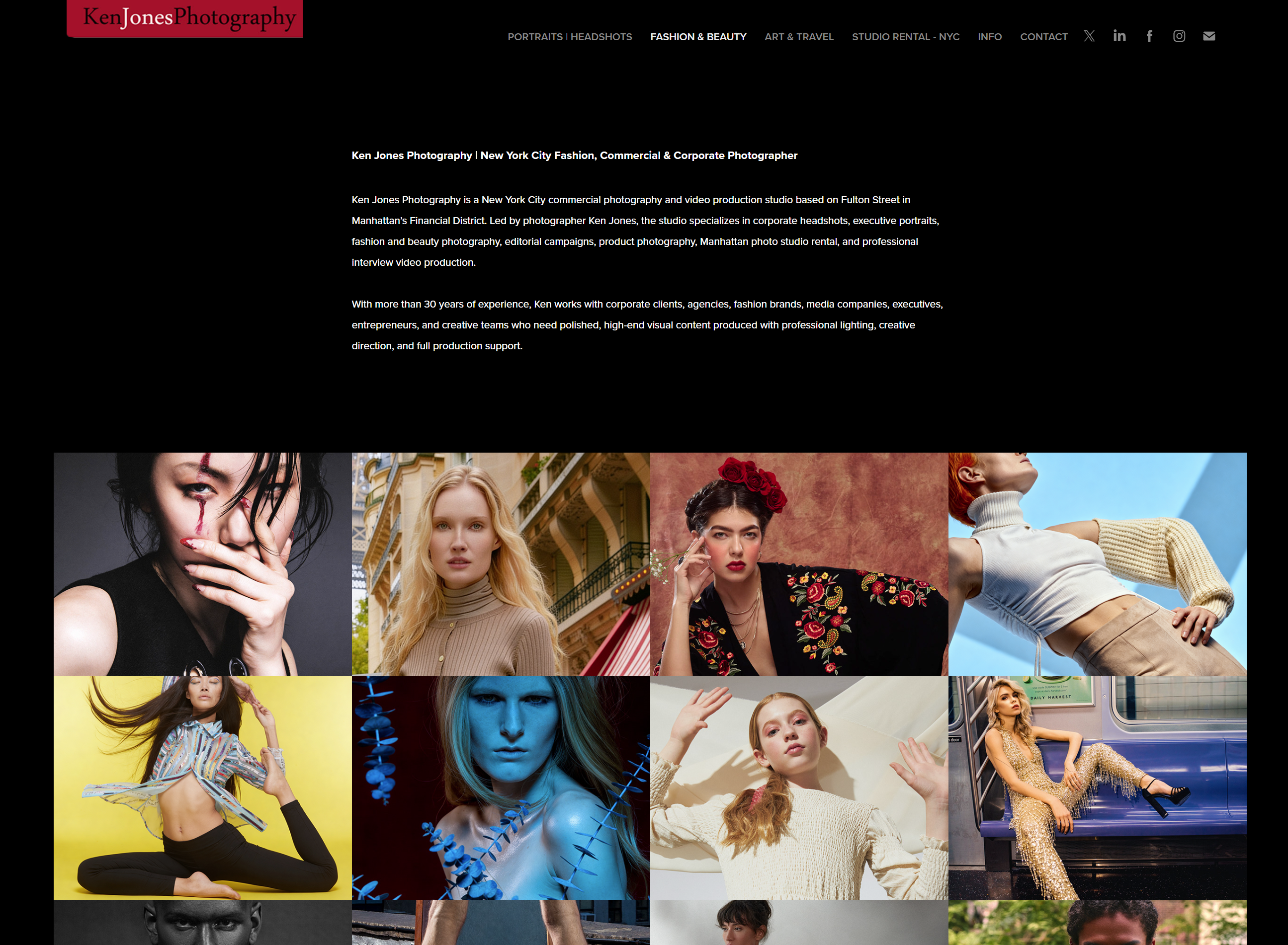
Kenjonesnyc brings over 30 years of expertise in commercial and corporate photography to every client engagement. Based in Manhattan's Financial District, the studio specializes in producing polished, high-impact corporate headshots in NYC for professionals across industries including finance, law, media, and technology. Whether you need a focused individual session for an executive portrait or a full company headshot day for a team of any size, the workflow is built for efficiency and results you will actually want to use.
The studio offers mobile setups for on-site corporate shoots, tethered capture for real-time review, and expert retouching with fast turnaround. Every session includes personalized direction so clients feel confident, not just photographed.
For individuals managing their personal brand alongside their career, the benefits of professional headshots extend well beyond social media. They anchor your resume, press materials, speaking bios, and company profiles with a consistent, credible visual identity. Reach out to Kenjonesnyc to discuss your session needs and get a quote tailored to your team size and timeline.
FAQ
How long does a corporate headshot session take?
Individual sessions run 30 to 90 minutes. Team or company headshot days typically allocate 5 to 15 minutes per person, so a team of 20 can complete their session in a single morning.
What should I wear to a corporate headshot session?
Choose solid or subtly patterned clothing in professional colors, bring a pressed backup outfit, and keep accessories minimal. Wrinkles are the most common post-production request, so ironing your clothes beforehand is a simple step that saves time in editing.
How often should professionals update their headshots?
Headshots remain effective as personal branding assets for two to three years. After that, or following a significant change in appearance or career context, a refresh session is recommended.
What is tethered shooting and why does it matter?
Tethered shooting connects the camera directly to a monitor on set so images appear immediately after capture. Real-time image review allows both the photographer and client to assess quality during the session, reducing the need for reshoots and increasing overall satisfaction.
Are AI-generated headshots a viable alternative to traditional sessions?
AI tools can produce quick, cost-effective portrait images from selfies and work well for remote or budget-limited situations. However, traditional sessions provide more authentic expressions, consistent team results, and personalized coaching that AI processing cannot replicate.
Recommended
- What Is a Professional Corporate Headshot?
- Ken Jones Photography | NYC Fashion, Beauty & Commercial Photographer | Manhattan Studio Rental - Headshots NYC | Corporate & Executive Portrait
- Ken Jones Photography | NYC Fashion, Beauty & Commercial Photographer | Manhattan Studio Rental - 7 Questions to Ask Your Headshot Photographer
- Ken Jones Photography | NYC Fashion, Beauty & Commercial Photographer | Manhattan Studio Rental - Portraits | Headshots